
Your Local Driving Instructor in Stockport Book Now!
Getting your driving licence can open the door to greater freedom. Whether you want to make commuting easier, travel independently, or simply gain an important life skill, learning to drive is a worthwhile investment.
If you are looking for manual driving lessons in Shaw, choosing the right instructor can make the learning process more straightforward and enjoyable. At GP Driving School Stockport, lessons are designed to help learners develop practical driving skills, confidence, and safe road awareness through structured one-to-one tuition.
From the first time you operate the clutch to the stage where you can confidently drive independently, your lessons can be adapted around your progress.
Learning a manual car involves coordinating several controls at the same time. You need to steer, operate the pedals, change gears, check your mirrors, observe other road users, and make safe decisions.
It is understandable if this feels like a lot during your first few lessons.
A good learning programme introduces these skills gradually. You can start with basic vehicle control before moving into increasingly complicated traffic situations.
Over time, you can build the ability to manage the car while also paying attention to everything happening around you.
For a new learner, the first lesson is about becoming familiar with the vehicle.
Your instructor can explain the basic controls and help you establish a comfortable and safe driving position. You can learn how the pedals work, understand the gear lever, and begin practising steering and clutch control.
Depending on your progress, you may start moving the car during your first session.
Do not be concerned if everything does not feel natural immediately. Stalling, over-revving, or making an awkward gear change can happen while you are learning.
With practice and constructive feedback, your control should become smoother.
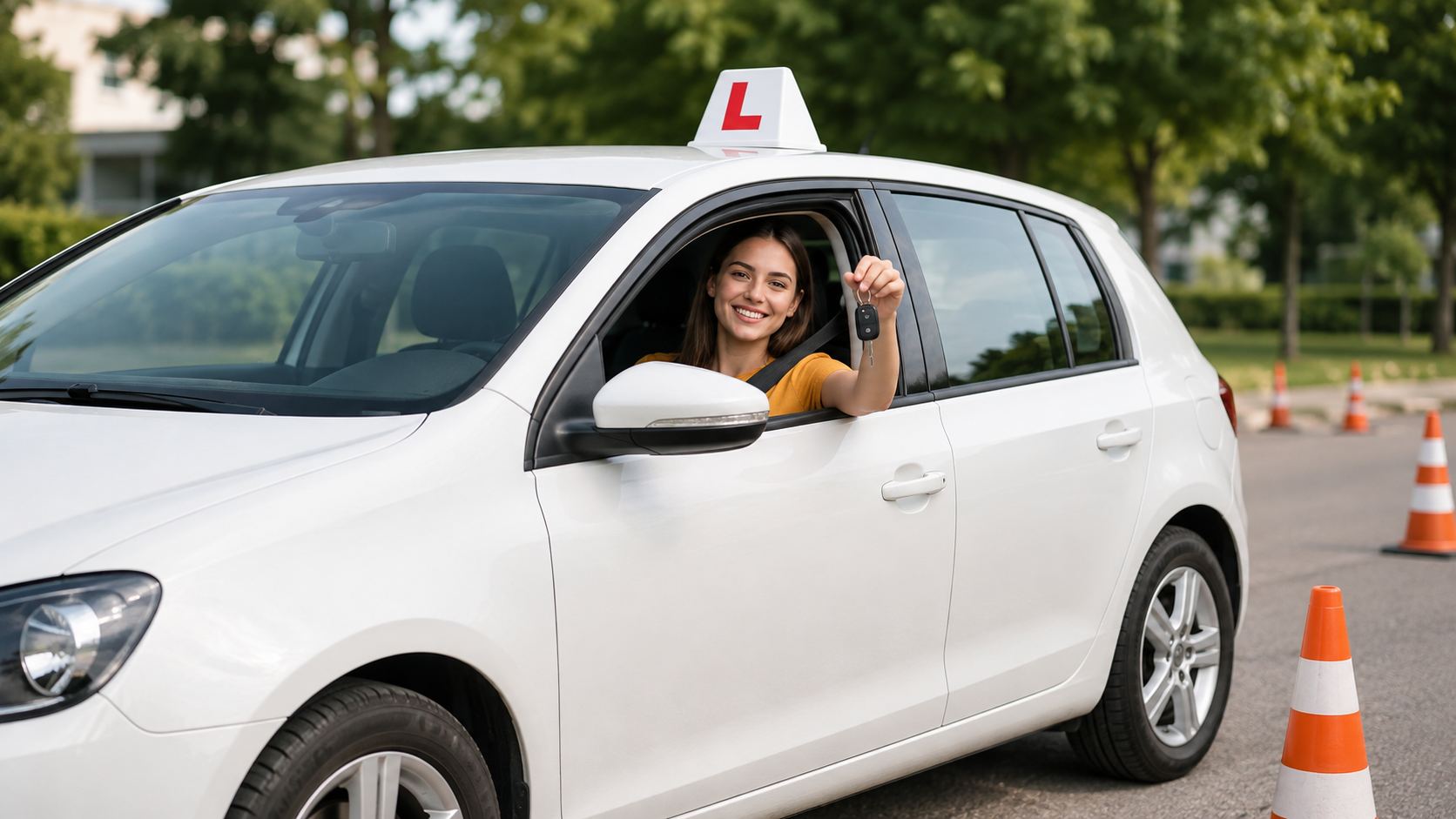
The clutch is one of the features that makes manual driving different from automatic driving.
At first, finding the biting point can be difficult. You may need time to understand how small movements of the clutch pedal affect the car.
Your lessons can help you practise clutch control in different circumstances.
You can learn how to use the clutch when:
Moving away from the kerb
Stopping
Changing gears
Driving slowly
Reversing
Parking
Starting on a hill
Moving through traffic
As you become more familiar with the clutch, you should feel increasingly comfortable controlling the vehicle at different speeds.
Knowing when and how to change gear is an important part of manual driving.
Your instructor can help you understand how gear selection relates to speed, road conditions, gradients, traffic, and what you intend to do next.
Smooth gear changes can improve vehicle control and make driving more comfortable.
The aim is eventually to select gears naturally without allowing the process to distract you from observation and planning.
Driving is not only about controlling the car.
A confident driver needs to understand what is happening around them and anticipate what might happen next.
During your lessons, you can develop skills such as:
Looking well ahead
Checking mirrors regularly
Identifying hazards early
Anticipating other road users
Adjusting speed
Selecting a suitable road position
Planning for junctions
Responding calmly to changing traffic
These skills are important in Shaw and anywhere else you may drive after obtaining your licence.
As your vehicle control improves, you can begin dealing with a wider variety of road situations.
Lessons can introduce you to different types of roads and traffic conditions, allowing you to gain experience without being rushed into situations before you are ready.
You may practise dealing with parked vehicles, pedestrians, cyclists, junctions, traffic lights, roundabouts, and other common urban driving situations.
The objective is to help you understand how to approach these situations safely rather than simply memorising what to do on one particular road.
Junctions are a major part of everyday driving.
A learner needs to approach them at an appropriate speed, observe carefully, understand priorities, position correctly, and decide when it is safe to proceed.
Your instructor can help you develop these skills through repeated practice.
You can work on emerging from side roads, turning left and right, dealing with traffic, using signals, selecting gears, and maintaining good observation.
As your confidence develops, you can begin handling more complicated junctions with less instructor assistance.
Roundabouts can initially seem confusing because several decisions may need to be made within a short period.
You need to consider your approach, lane position, speed, traffic flow, road markings, signals, and exit.
Rather than treating roundabouts as something to memorise, your instructor can help you understand the principles behind them.
With practice, you can learn to:
Approach at a suitable speed
Select the correct lane
Observe traffic
Judge safe gaps
Enter safely
Maintain appropriate positioning
Signal correctly
Exit smoothly
Regular practice can make roundabouts much less intimidating.
Parking is an essential skill for any driver.
Whether you are using a supermarket car park, parking near work, or finding a space on a residential street, being comfortable with low-speed manoeuvres can make everyday driving much easier.
Your manual driving lessons can include practice with different parking situations and reversing exercises.
You can develop your understanding of positioning, steering, clutch control, observation, and space management.
The goal is not simply to remember a particular sequence. You should understand how to control the car and adapt when the available space or surroundings are different.
Hill starts are another area where manual learners often need extra practice.
Controlling the clutch and accelerator while preventing unwanted movement requires coordination and timing.
Your instructor can introduce hill starts gradually and help you develop a technique that allows you to move away safely and confidently.
Low-speed control is also useful when parking, reversing, dealing with congestion, and navigating narrow areas.
You do not need any previous driving experience to begin.
A complete beginner can start with the fundamentals and gradually build up their knowledge.
Early lessons may focus heavily on vehicle control. As you become more comfortable, more attention can be given to traffic, road positioning, junctions, and independent decision-making.
There is no benefit in rushing through the learning process. Understanding each stage properly can give you a stronger foundation for the next one.
Some learners have already completed several lessons but still do not feel ready for their driving test.
Perhaps you are struggling with roundabouts, parking, independent driving, or busy traffic. You may simply want to improve your confidence after taking a break from lessons.
Additional tuition can be focused on your particular needs.
Instead of starting again from the beginning, your instructor can identify the areas that require improvement and spend more time developing those skills.
When you are approaching test standard, your lessons can become more focused on independent and consistent driving.
Test preparation may include:
Independent driving
Following directions
Junctions
Roundabouts
Meeting and passing traffic
Road positioning
Speed control
Parking
Reversing
Moving off
Mirror use
Signalling
Hazard awareness
General vehicle control
Your instructor can monitor your performance and provide feedback on areas where further practice is needed.
The aim is to help you reach the point where you can drive safely without relying on frequent prompts.
Everyone learns at a different pace.
The number of lessons you need may depend on your previous experience, confidence, ability to understand feedback, frequency of lessons, and how quickly you develop consistent driving habits.
Some learners may require fewer lessons, while others benefit from additional practice.
Rather than focusing entirely on a target number of hours, concentrate on your ability to demonstrate safe, independent driving.
GP Driving School Stockport lists manual driving lesson options including a 2-hour manual lesson for £76 and a 10-hour manual block for £360.
If you are interested in learning in Shaw, contact the driving school before booking to confirm current pricing, availability, pickup arrangements, and area coverage.
This also gives you an opportunity to explain your current experience and discuss the type of training you need.
One-to-one tuition gives your instructor the opportunity to focus on you throughout the lesson.
If you need more time to practise a particular skill, the lesson can be adjusted accordingly. If you demonstrate that you are ready to progress, new challenges can be introduced.
This personalised approach can be particularly useful for learners who have specific concerns about driving.
It allows your training to focus on your development rather than following exactly the same path as every other learner.
Passing your test is a major achievement, but your driving experience does not end there.
After passing, you may drive unfamiliar roads, encounter heavy traffic, deal with different weather conditions, and make decisions without an instructor beside you.
That is why your training should encourage independence.
You can gradually take more responsibility during lessons, make your own decisions, and learn to anticipate potential problems before they develop.
This helps bridge the gap between being a learner and becoming an independent driver.
Professional tuition can help you develop habits that remain valuable throughout your driving life.
These include checking mirrors, maintaining safe distances, controlling speed, anticipating hazards, positioning correctly, signalling appropriately, and remaining aware of vulnerable road users.
Good habits developed early can make driving safer and more comfortable in the long term.
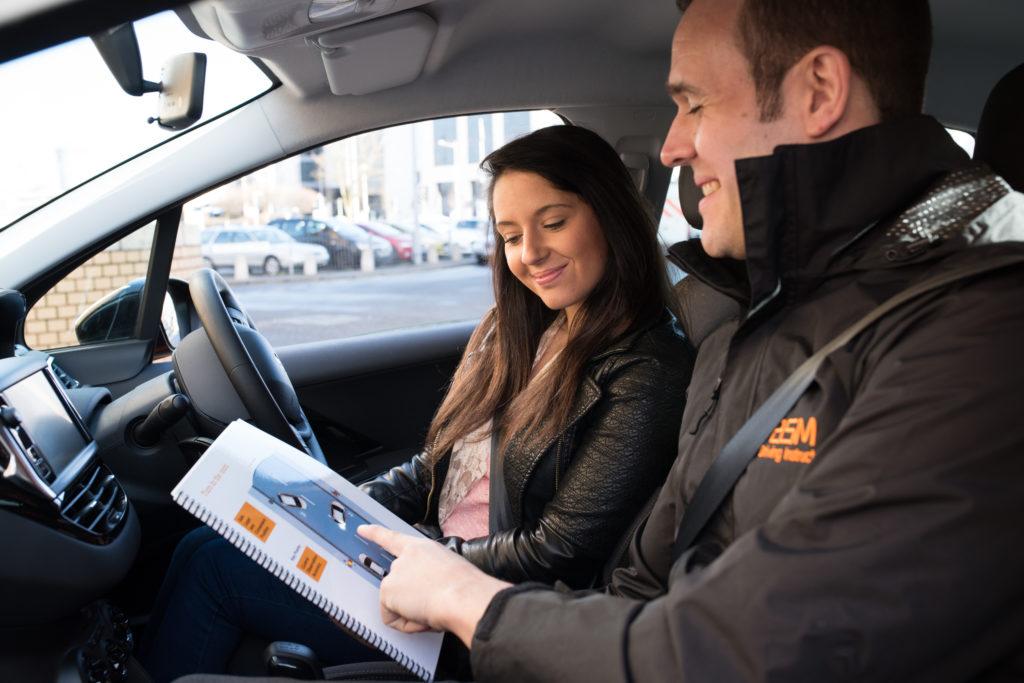
Not everyone feels confident when they first begin driving.
Some learners may worry about stalling. Others may feel uncomfortable when surrounded by traffic or become nervous at complicated junctions.
A calm learning environment can help you overcome these concerns.
Your instructor can explain mistakes, demonstrate better techniques, and give you opportunities to practise until you become more comfortable.
Progress is not always immediate, but consistent practice can make a significant difference.
GP Driving School Stockport offers manual and automatic driving tuition with DVSA-approved instructors.
The school focuses on one-to-one training and a friendly learning environment, with lessons tailored to the learner’s ability.
Whether you are starting from zero or preparing for your practical test, the training can focus on developing the skills you need at your current stage.
If you are searching for manual driving lessons in Shaw, GP Driving School Stockport can help you begin or continue your driving journey.
From learning the basics of clutch control and gear changes to handling junctions, roundabouts, parking, and independent driving, each lesson can help you become more capable behind the wheel.
Professional instruction gives you the opportunity to learn correct techniques, identify weaknesses, and develop confidence through regular practice.
For current availability and booking information, contact:
GP Driving School Stockport
Stockport, United Kingdom
Phone: 07974 303207
Email: info@gp-drivingschoolstockport.co.uk
You do not need to wait until you feel completely confident before starting driving lessons. Confidence develops through learning and practice.
If your goal is to learn manual driving in Shaw, start with a professional lesson and work through each stage at a pace that suits your ability.
Contact GP Driving School Stockport today and take the first step towards becoming a safe, confident, and independent driver.

