
Your Local Driving Instructor in Stockport Book Now!
Learning to drive is an important milestone that can give you greater independence, flexibility and confidence in everyday life. Whether you need to drive to work, college, university, appointments or simply want the freedom to travel without relying on others, gaining a driving licence can make a significant difference. However, becoming a good driver involves much more than learning how to operate a vehicle and passing the practical test. Professional driving lessons should help you develop strong vehicle control, observation, hazard awareness, road positioning and the confidence to make safe decisions independently.
If you are looking for manual and automatic driving lessons in Alderley Edge, GP Driving School Stockport provides driving tuition across Stockport and surrounding areas. The school offers both manual and automatic lessons and states that it works with DVSA-approved instructors who provide patient, structured and tailored training.
Whether you are a complete beginner, an existing learner looking for additional tuition, a nervous driver who wants to build confidence or someone returning to driving after a long break, lessons can be adapted to your individual needs and progress.
Every learner approaches driving with a different level of confidence and experience. Some people feel comfortable behind the wheel after only a few lessons, while others need more time to become familiar with the vehicle and different road situations.
For this reason, personalised instruction can be particularly valuable.
GP Driving School Stockport explains that its instructors tailor lessons according to the learner’s ability, previous experience and progress. This means the training can develop gradually rather than expecting every learner to follow exactly the same timetable.
A complete beginner may start by learning about the controls of the car, steering, braking, acceleration and moving off. Manual learners also need to develop clutch control and gear-changing skills, while automatic learners can concentrate more immediately on steering, observation and road awareness.
As your confidence improves, lessons can move towards junctions, roundabouts, parking, busier roads, independent driving and practical-test preparation.
The aim is to help you become a confident and responsible driver who can make appropriate decisions without relying on an instructor.
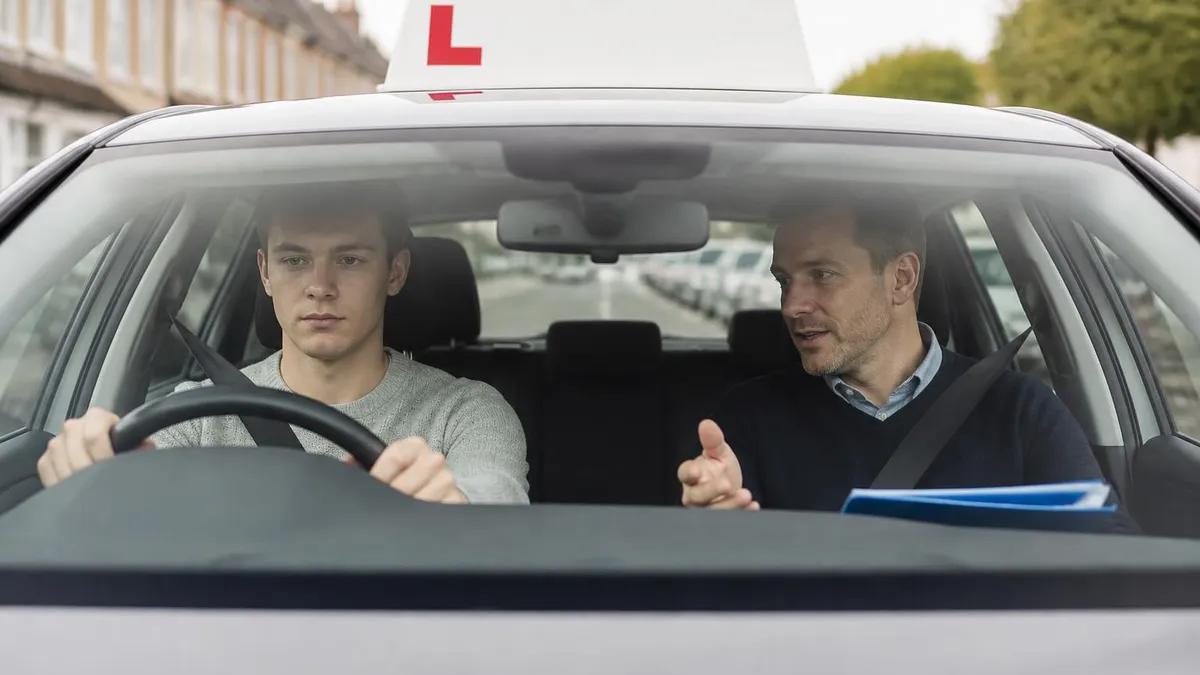
Manual driving lessons are a popular choice for learners who want to learn in a manual vehicle and develop the skills associated with operating a manual gearbox.
For a first-time learner, the clutch and gears can initially feel difficult to coordinate. You have to control the clutch and accelerator while steering, observing traffic, checking mirrors and responding to road conditions.
With professional instruction and regular practice, these skills can become much more natural.
Manual driving lessons can introduce clutch control, moving off, stopping and changing gears. Once these fundamentals become comfortable, your instructor can help you develop smoother gear changes and better control at different speeds.
Lessons can then progress towards more demanding situations such as hill starts, traffic queues, junctions, roundabouts, parking and independent driving.
Learning manual is not simply about knowing when to move the gear lever. You should also understand how speed, road conditions and traffic affect your choice of gear and how to keep the vehicle under smooth control.
One of the main reasons learners choose manual tuition is flexibility.
If you pass your driving test in a manual car, you generally have the ability to drive manual and automatic vehicles, subject to the conditions of your licence. Learners who pass their test in an automatic vehicle generally have restrictions on driving manual cars unless they later take a manual driving test.
This can make manual training attractive to people who want the widest choice of vehicles after qualifying.
Manual lessons can also be particularly useful if you expect to drive a manual car regularly.
Although learning clutch control and gears can require additional practice, these skills can become a natural part of driving with experience.
Automatic driving lessons provide an alternative for learners who prefer simpler vehicle operation.
An automatic vehicle changes gears automatically, so the driver does not have to operate a conventional manual clutch or manually select gears during normal driving.
For many learners, this removes one of the more challenging aspects of learning to drive.
Instead of coordinating clutch control and gear changes, you can concentrate more directly on the road.
You still need to check mirrors, observe traffic, understand signs and markings, maintain appropriate speed, position the vehicle correctly and anticipate hazards.
Automatic tuition can be a particularly appealing option for learners who feel anxious about stalling or who have found manual clutch control difficult.
It can also suit someone who already knows they intend to drive an automatic vehicle after passing their test.
An automatic car may simplify vehicle operation, but automatic learners still need comprehensive driving tuition.
Lessons can cover moving off and stopping, steering, braking, speed control, mirror checks, road positioning, junctions, roundabouts, parking and independent driving.
You will also need to understand traffic signs, road markings, speed limits and the behaviour of different road users.
The advantage of automatic transmission is that you have fewer mechanical controls to coordinate. This can give you more opportunity to focus on observation and decision-making.
However, safe driving still depends on the driver rather than the gearbox.
There is no single answer that applies to every learner.
Manual driving may be appropriate if you want greater flexibility and would like the ability to drive both manual and automatic cars after passing your test.
Automatic driving may be more suitable if you want straightforward vehicle operation or already know that you will be using an automatic car.
Your confidence and learning preferences can also influence your decision.
Some learners enjoy learning clutch and gear control and become comfortable with it relatively quickly. Others find that an automatic car allows them to focus more easily on the road and become confident sooner.
Before choosing, consider the type of vehicle you expect to drive regularly and what you want from your driving licence in the future.
You do not need any previous driving experience to begin professional lessons.
During your first lessons, your instructor can introduce you to the vehicle and explain the controls.
You can learn how to adjust your seating position, understand the controls, steer, brake and accelerate before gradually taking greater responsibility for the vehicle.
Manual learners will also be introduced to clutch control and gear changes at an appropriate stage.
As your confidence increases, you can begin driving on different types of roads and dealing with more complex traffic situations.
The process should be gradual. You do not need to master everything during your first lesson.
Many people feel nervous when they first start driving.
You may worry about stalling, making mistakes, approaching junctions, driving near other vehicles or handling busy roads.
A supportive instructor can help you work through these concerns progressively.
GP Driving School Stockport describes its learning environment as friendly and its lessons as patient and structured.
This type of approach can be helpful because learners need to feel comfortable asking questions and discussing areas where they are struggling.
As your skills improve, repeated practice can help replace uncertainty with familiarity.
The goal is not to rush a nervous learner into situations they are not ready to handle. It is to develop skills step by step until they can manage those situations safely.
Driving lessons can also be useful if you already hold a driving licence.
Some qualified drivers stop driving for several years and later discover that their confidence has declined.
You may have moved to a new area, started a new job or simply decided that you want to drive again.
Refresher lessons can focus on the areas where you need additional practice.
For example, you might want to improve your confidence with parking, roundabouts, busy junctions or unfamiliar roads.
Rather than starting from the beginning, tuition can be tailored around your existing experience and current abilities.
Local driving experience is an important part of becoming a confident driver.
When learning around Alderley Edge and nearby areas, you can experience a mixture of residential roads, junctions, roundabouts, traffic conditions and connecting routes.
However, professional tuition should also prepare you to drive outside the local area.
Passing a driving test is not about memorising a handful of roads. You need to understand how to interpret signs and road markings, assess hazards, choose appropriate speeds and make safe decisions on unfamiliar roads.
These are skills you can use anywhere.
Observation is one of the foundations of safe driving.
A good driver needs to look ahead and identify potential hazards before they become immediate problems.
For example, parked vehicles may conceal pedestrians. A cyclist may move around an obstruction. A vehicle could emerge from a side road. Traffic ahead may suddenly slow down.
Looking ahead gives you more time to react.
During driving lessons, your instructor can help you develop regular mirror checks, effective scanning and forward observation.
Over time, these actions should become natural rather than something you have to consciously remember.
Junctions require learners to combine several different driving skills.
You need to control your speed, select an appropriate position, observe carefully and understand signs and road markings.
You must then decide whether it is safe to proceed.
For beginners, this can initially feel complicated because several things are happening at once.
A structured driving programme can introduce junctions progressively.
You can begin with simpler situations before moving towards busier junctions that require more observation and decision-making.
The aim is to help you develop your own judgement so that you can assess a junction independently.
Roundabouts are another important part of driving tuition.
Learners need to understand lane markings, road signs, speed control, observation and positioning.
Your instructor can help you practise approaching roundabouts safely, selecting the correct lane, observing other traffic and exiting appropriately.
As your confidence grows, you can experience different types of roundabouts and varying levels of traffic.
The objective is to understand how roundabouts work rather than simply memorise one local route.
Once you understand the principles, you can apply them to unfamiliar roundabouts after passing your test.
Parking is an everyday skill that you are likely to use regularly once you have your licence.
You may need to park outside your home, near work, at shops, at a station or in unfamiliar areas.
Driving lessons can provide practice with different parking and manoeuvring situations.
These may include parallel parking, reverse bay parking and controlled reversing.
The focus should be on safe control and observation rather than memorising a particular steering sequence.
Parking spaces will not always be identical to the ones you used during lessons, so you need to understand how to adapt to different spaces and surrounding conditions.
One of the most important stages of learning to drive is becoming independent.
At the beginning of your training, your instructor will provide frequent guidance.
As your skills improve, that guidance should gradually reduce.
Independent driving can involve following road signs, following directions or using a sat-nav.
You need to plan ahead, choose lanes appropriately and make safe decisions without waiting for instructions.
If you miss a turning, the safest response is not to panic or make a sudden manoeuvre. Continue safely and find another suitable route.
Learning to remain calm when something unexpected happens is an important part of becoming an independent driver.
For many learners, the practical driving test is the final stage of their initial training.
GP Driving School Stockport provides practical-test preparation as part of its driving tuition.
Preparation should cover the key skills required to drive safely and independently, including vehicle control, observation, road positioning, junctions, roundabouts, parking, independent driving and hazard awareness.
As the test gets closer, your instructor can help identify areas that still need improvement.
The aim should be consistency.
Being able to perform a manoeuvre correctly once is different from being able to handle it safely and reliably every time.
The number of lessons required before taking a test differs from one person to another.
GP Driving School Stockport explains that lesson requirements depend on previous experience, confidence and how quickly each learner progresses.
This is why it is important not to compare your learning journey directly with somebody else’s.
One learner may need more practice with vehicle control. Another may need additional work on roundabouts or independent driving.
Your instructor can monitor your progress and help determine when you are approaching the required standard.
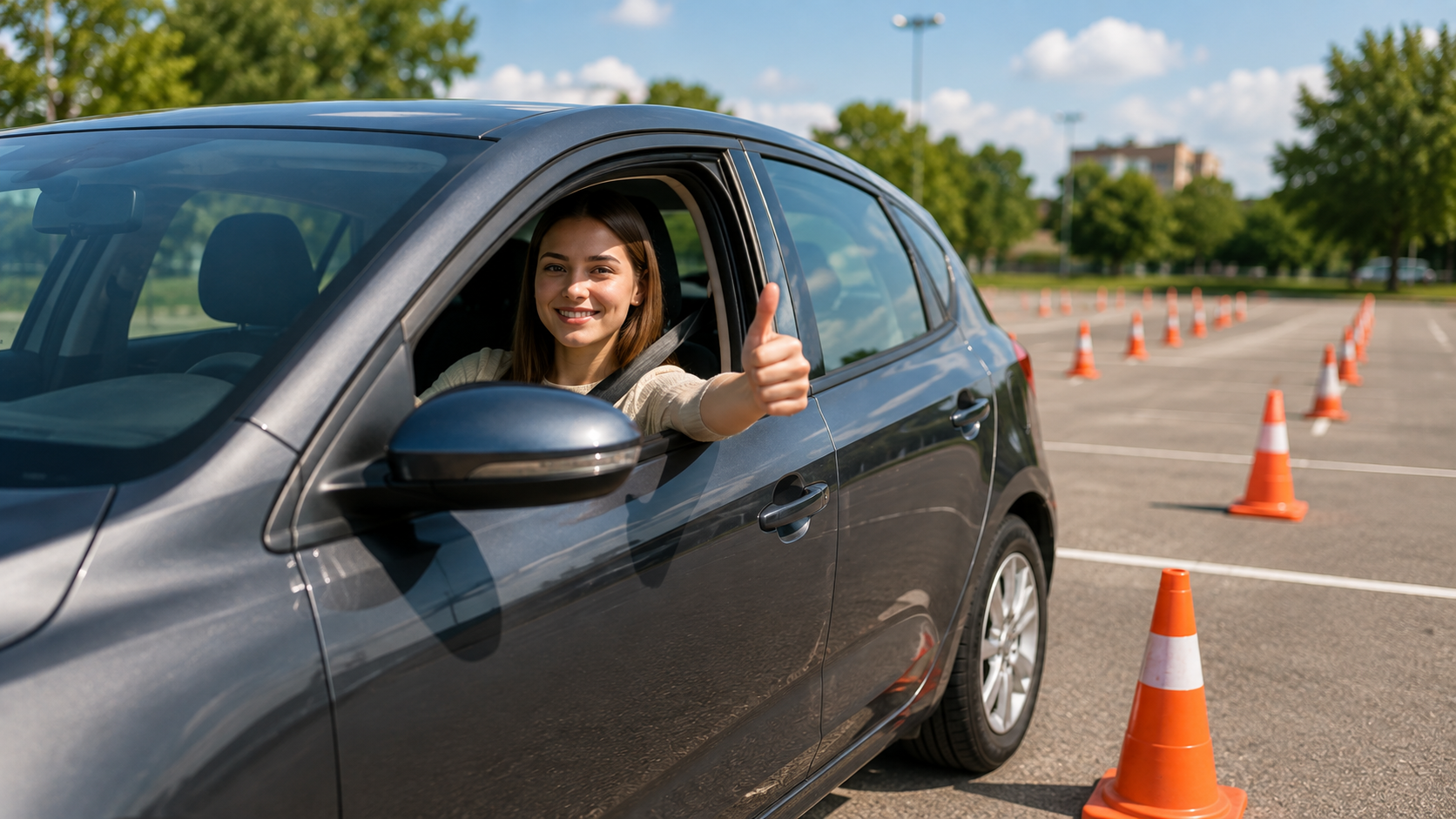
GP Driving School Stockport highlights one-to-one training as one of its key features.
Individual tuition allows the instructor to concentrate on the learner throughout the lesson.
This can be useful when identifying specific weaknesses.
For example, if you are comfortable with steering but struggle with clutch control, more time can be devoted to that skill. If you are already confident with basic manoeuvres, the lesson can progress to more advanced road situations.
One-to-one training can therefore make lessons more relevant to your individual needs.
GP Driving School Stockport states that its instructors are DVSA-approved.
Professional instruction can help learners understand not only what they should do but why they should do it.
A good instructor can provide clear explanations, constructive feedback and practical guidance.
This is particularly important when learners make mistakes.
Instead of simply correcting an error, the instructor can help you understand what caused it and how to avoid repeating it.
The long-term goal is to develop independent judgement.
The atmosphere during driving lessons can influence how comfortable a learner feels.
If you are able to ask questions and discuss mistakes openly, you are more likely to understand areas that require improvement.
GP Driving School Stockport describes its approach as providing a friendly learning environment with patient and structured instruction.
This can be particularly beneficial for beginners and nervous learners.
Nobody starts as an expert driver. Learning involves practice, mistakes and gradual improvement.
The pricing information supplied by GP Driving School Stockport lists several lesson options:
These prices are based on the information provided for the school and should be confirmed directly before booking, as prices, availability and terms can change.
Block lessons may be useful for learners who want to plan several sessions in advance and maintain regular training.
There is no guaranteed number of lessons that every learner requires.
Your learning time can depend on your previous experience, confidence, frequency of lessons, ability to practise and how quickly you develop the necessary skills.
GP Driving School Stockport states that instructors tailor lessons according to individual ability and progress.
This means the emphasis is on becoming genuinely competent rather than simply completing a predetermined number of hours.
Before taking your practical test, you should be able to demonstrate consistent vehicle control, good observation, appropriate road positioning, hazard awareness and independent decision-making.
Regular lessons can help you maintain continuity throughout your training.
Each lesson can build on what you learned previously.
For example, you might first develop basic vehicle control, then learn junctions and roundabouts, followed by parking and independent driving.
Regular practice can make these skills increasingly familiar.
Long gaps between lessons can sometimes make it more difficult to maintain progress, especially during the early stages.
A consistent schedule can help you build confidence and retain what you have learned.
Passing your driving test is an important achievement, but it is not the end of learning.
Once you are qualified, you will encounter situations that may not have appeared during your lessons.
You might drive on unfamiliar roads, encounter heavy traffic, deal with poor weather or come across unexpected hazards.
This is why good driving lessons should focus on transferable skills.
Observation, anticipation, speed management, hazard awareness and safe positioning remain important regardless of where you are driving.
GP Driving School Stockport specifically describes its aim as helping learners pass their test and drive safely for life.
Hazard awareness involves identifying things that could require you to change speed or direction.
Potential hazards can include pedestrians, cyclists, parked cars, roadworks, traffic queues, junctions and vehicles entering the road.
Good drivers learn to anticipate hazards rather than reacting at the last possible moment.
During lessons, you can develop the habit of looking further ahead and considering what might happen next.
This gives you more time to respond and can help make your driving smoother and safer.
Safe driving is not simply about staying below the posted speed limit.
You should select a speed that is appropriate for the road and conditions.
For example, a narrow road with parked vehicles and limited visibility may require a more cautious approach than a clear section of road.
Learners should understand when to reduce speed and why.
Developing good speed judgement during lessons can help you deal with unfamiliar roads more confidently after passing your test.
As an independent driver, you will eventually encounter different weather and traffic conditions.
Rain can reduce visibility and affect road grip. Darkness can make hazards harder to identify. Heavy traffic may require greater anticipation and patience.
Your driving style should adapt accordingly.
Lessons can help you understand the importance of appropriate speed, following distance, observation and planning.
These are valuable skills that remain relevant throughout your driving life.
Passing your test does not necessarily mean you will immediately feel confident in every possible driving situation.
Confidence develops with experience.
The stronger your foundations are during your lessons, the easier it can be to continue improving after you qualify.
A driver who understands how to assess hazards and adapt to unfamiliar roads has more useful skills than someone who has simply memorised a test route.
This is why practical driving education should focus on understanding rather than memorisation.
GP Driving School Stockport presents itself as a local driving school serving Stockport and surrounding areas, with both manual and automatic tuition available.
The school highlights DVSA-approved instructors, an excellent pass rate, a friendly learning environment and one-to-one training.
Its stated approach is based on patient, structured and tailored lessons.
For learners in Alderley Edge, the availability of both manual and automatic training means you can choose the type of tuition that suits your preferences and future driving plans.
The school also provides block lesson options and practical-test preparation.
GP Driving School Stockport describes a four-step process for starting a driving programme.
The first step is to select your plan according to your requirements and goals.
The second step is consultation, allowing you to discuss any questions or concerns before beginning.
The third step is to purchase your chosen course.
The final step is to start your training regularly and work through the programme with your instructor.
This provides a straightforward route from choosing your lesson package to beginning your practical training.
The choice of manual or automatic driving lessons should reflect your personal circumstances.
A first-time learner may want manual tuition because they want the flexibility to drive both types of vehicles.
Another learner may prefer automatic because they want to simplify the mechanical side of driving.
A nervous learner may feel more comfortable without having to coordinate a clutch and gears.
A qualified driver returning to the road may choose refresher lessons in either type of vehicle.
The important thing is to choose a learning approach that allows you to develop safe and confident driving habits.
If you are searching for manual and automatic driving lessons in Alderley Edge, GP Driving School Stockport offers professional driving tuition designed around individual learners.
The school provides manual and automatic options, one-to-one training, practical-test preparation and refresher tuition. Its stated approach focuses on helping learners develop confidence and become safe, independent drivers.
Whether you are taking your first lesson, continuing your existing training or returning to driving after several years, structured tuition can help you work towards your goals one stage at a time.
The advertised lesson options include 1.5-hour automatic lessons, 2-hour manual lessons and 10-hour block packages. Contact the school directly to confirm current prices and availability before booking.
GP Driving School Stockport
Phone: 07974 303207
Email: info@gp-drivingschoolstockport.co.uk
Location: Stockport, United Kingdom
If you are ready to start learning, contact GP Driving School Stockport to discuss manual or automatic driving lessons in Alderley Edge, ask about current availability and choose a lesson package suited to your experience and goals.

