
Your Local Driving Instructor in Stockport Book Now!
Learning to drive is one of the most useful skills you can develop. A driving licence can make everyday journeys more convenient, give you greater independence and make it easier to travel to work, college, university, appointments and social activities. However, becoming a safe and confident driver takes more than simply learning how to operate a car. It requires proper instruction, regular practice, good observation and the ability to make sensible decisions in changing traffic conditions.
If you are searching for manual and automatic driving lessons in Heald Green, GP Driving School Stockport provides professional driving tuition for learners with different levels of experience. Whether you are a complete beginner taking your first lesson, someone who has already had lessons but needs more practice, a nervous learner who wants a patient approach, or a qualified driver looking for refresher tuition, lessons can be adapted around your individual requirements.
The school offers both manual and automatic driving lessons, giving learners the opportunity to choose the type of vehicle that best matches their preferences and future driving plans. With one-to-one instruction and a progressive approach, the focus is on helping learners develop practical driving skills while building the confidence needed to drive independently.
Every learner has a different starting point. Some people have never sat in the driver’s seat before, while others may have already completed several hours of tuition. Some learners quickly become comfortable with vehicle controls, whereas others need more time to develop confidence.
This is why personalised driving tuition can be valuable.
Rather than expecting every learner to follow exactly the same pace, an instructor can identify the skills you already understand and the areas where you need further practice. Lessons can then progress according to your ability.
For a complete beginner, early lessons may concentrate on basic vehicle controls, steering, braking, moving off and stopping. As your confidence develops, you can progress towards junctions, roundabouts, busier roads, parking, independent driving and practical-test preparation.
For a learner with previous experience, there may be no reason to spend lesson after lesson repeating basic skills. Instead, the instructor can focus on areas that need improvement, whether that is clutch control, roundabouts, parking, observation, lane discipline or confidence in heavier traffic.
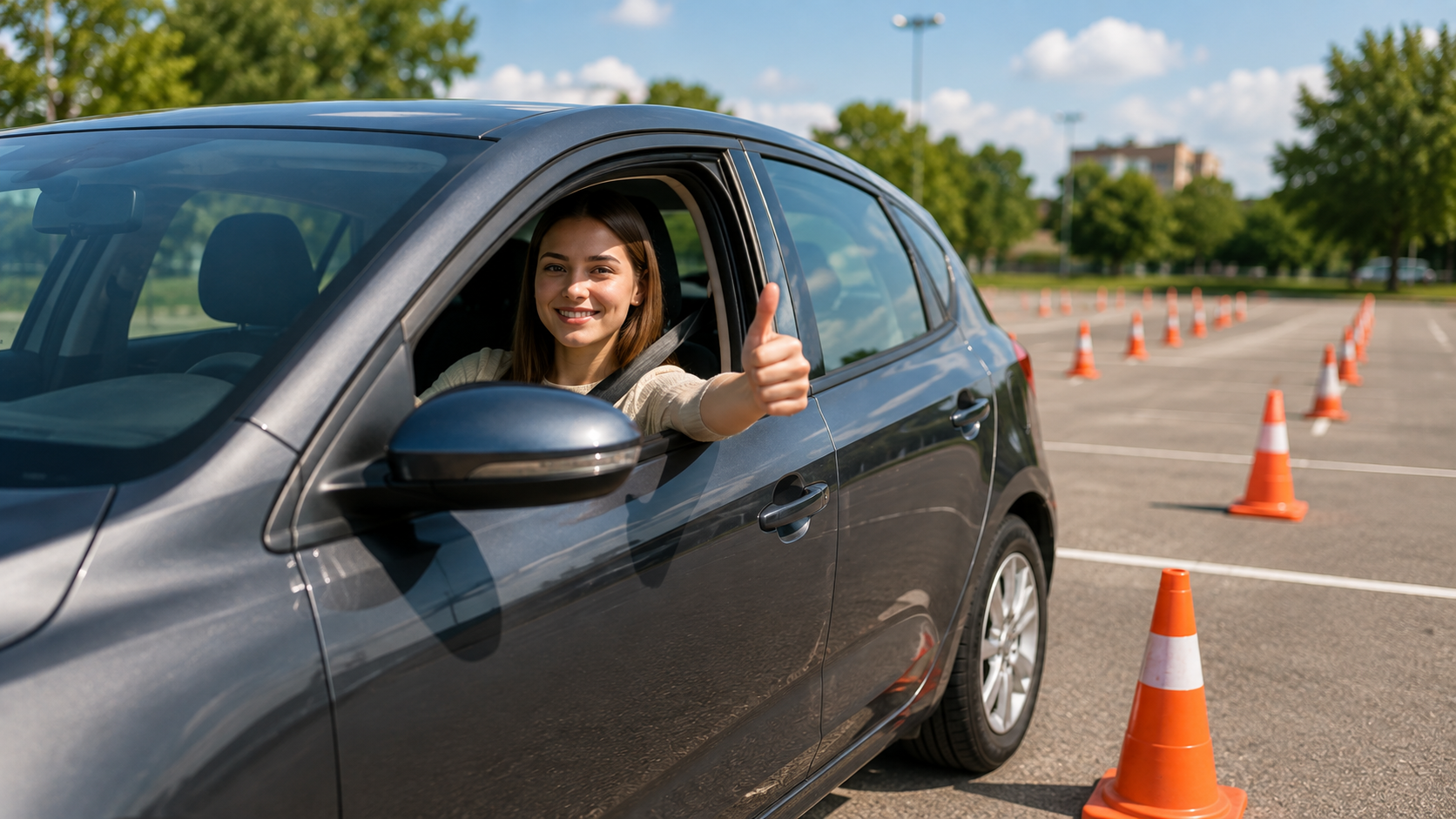
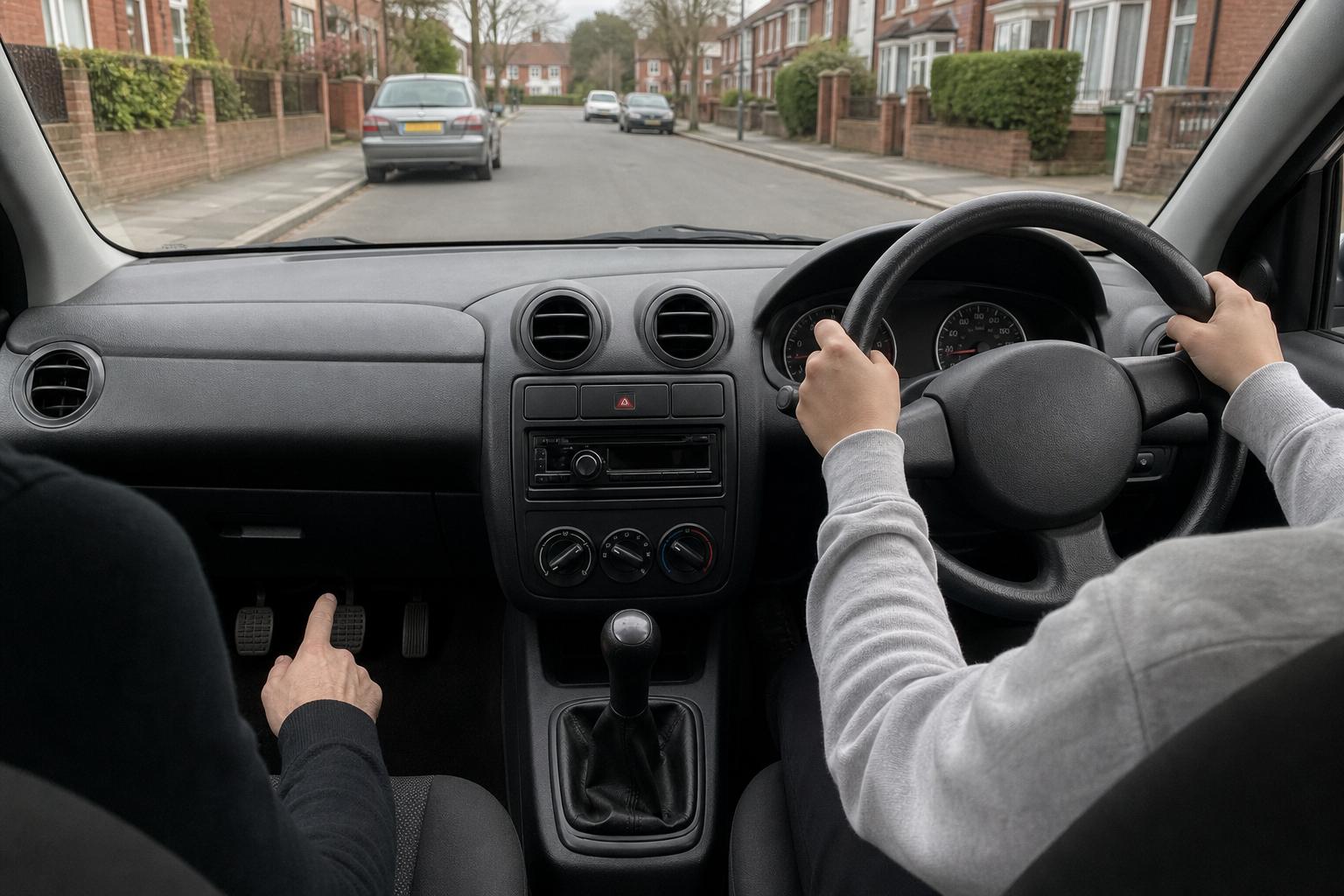
Manual driving remains a popular choice for learners who want to develop the skills required to drive a manual vehicle. A manual car requires the driver to coordinate the clutch, accelerator, brake, steering and gears. At the beginning, this can feel complicated because several controls need to be used at the same time.
With structured instruction and regular practice, however, these actions can become much more natural.
Manual lessons can gradually introduce you to clutch control, moving off, stopping, changing gears, selecting appropriate gears for different road conditions, hill starts and smooth vehicle control. Once these basic skills are developing, lessons can move towards more complex road situations.
You may practise approaching junctions, dealing with roundabouts, meeting other traffic, changing lanes, managing speed, parking and driving independently.
The purpose of manual tuition is not simply to teach you how to change gears. You also need to understand why you are changing gear, how your speed affects vehicle control and how to combine vehicle control with observation of the road.
One of the main reasons people choose manual lessons is flexibility.
Passing a practical driving test in a manual vehicle generally allows you to drive manual and automatic cars, subject to the conditions of your licence. This can give you more options when choosing a vehicle in the future.
Manual tuition can therefore be suitable for people who want to drive different types of cars or who expect to use a manual vehicle after passing their test.
Manual driving may take some learners longer to master because of the additional coordination involved. However, this should not discourage beginners. Clutch control and gear changes are skills that can improve considerably with appropriate instruction and repeated practice.
Automatic driving has become an increasingly attractive option for new learners. In an automatic vehicle, the driver does not need to operate a manual clutch or select gears in the same way as they would in a traditional manual car.
This can simplify the physical side of driving.
For some learners, removing clutch and gear coordination means they can concentrate more of their attention on the road. They can focus on mirrors, signs, road positioning, hazards, pedestrians, cyclists and other vehicles without also having to think about when to change gear.
GP Driving School Stockport provides automatic driving lessons for learners who prefer this type of vehicle.
Automatic tuition can be particularly appealing to someone who feels nervous about stalling or finds manual gear changes difficult. It can also suit learners who already know that they intend to drive an automatic car after obtaining their licence.
Although automatic vehicles simplify some aspects of vehicle control, automatic learners still need comprehensive driving tuition.
You must learn how to approach junctions safely, negotiate roundabouts, manage speed, position the vehicle correctly, use mirrors, identify hazards and respond to other road users.
You also need to understand road signs, road markings, speed limits and the rules that apply to different road situations.
Automatic driving is therefore not a shortcut around learning to drive safely. It is simply a different way of controlling the vehicle.
One of the most common questions from new learners is whether they should choose manual or automatic lessons.
There is no universal answer.
The right choice depends on your circumstances, your confidence, the type of vehicle you expect to drive and how much flexibility you want after passing your test.
If you want to drive manual vehicles in the future and would like the broadest choice of vehicles, manual tuition may be appropriate. You will need to learn clutch and gear control, but these skills can become easier through regular practice.
If you prefer a simpler driving experience and expect to use an automatic vehicle, automatic tuition may be more suitable. You may find that you can concentrate more quickly on road awareness because you are not coordinating clutch and gear changes.
The best choice is the one that allows you to learn effectively and develop safe, independent driving skills.
Starting from zero can seem daunting, but you do not need any previous experience to begin driving lessons.
Your instructor can introduce you to the car and its controls gradually. Early lessons are usually about becoming comfortable with the vehicle and understanding how it responds to your actions.
You can learn how to adjust the driving position, understand the controls, steer accurately, accelerate and brake smoothly, move off safely and stop under control.
Manual learners will also begin working on clutch control and gear selection, while automatic learners can concentrate more heavily on steering, observation and road positioning.
As you become more confident, your lessons can gradually move into more complicated traffic situations.
The aim is to build each skill on top of the previous one rather than introducing too much information at once.
Not everyone feels confident behind the wheel immediately. Nervousness is particularly common among beginners who have never controlled a vehicle before.
Some learners may worry about stalling, making mistakes, approaching junctions, driving near other vehicles or dealing with busy roads.
A patient instructor can help by introducing these situations gradually.
Instead of expecting a nervous learner to deal with heavy traffic straight away, lessons can begin in quieter environments where the learner has time to understand the basic controls. As confidence improves, more challenging situations can be introduced.
The learner can gradually develop confidence with junctions, roundabouts, lane changes, parking, busy roads and independent driving.
Real confidence comes from knowing what to do and understanding why you are doing it.
Driving lessons are not only for people working towards their first driving licence.
If you already have a licence but have not driven for several years, refresher lessons can be a useful way to rebuild your confidence.
You may have passed your test a long time ago but now feel uncomfortable driving in heavy traffic. Perhaps you have moved to a new area, changed vehicles or simply want to improve your parking and manoeuvring.
Refresher lessons can focus specifically on the areas that concern you.
For example, you might want to practise driving on unfamiliar roads, handling busy junctions, parking in tighter spaces or becoming more comfortable with modern traffic conditions.
There is no need to repeat every beginner skill if you already have a good level of experience. The lesson can be built around your individual requirements.
One of the most valuable aspects of local driving lessons is the opportunity to experience different road environments.
Heald Green and surrounding areas provide learners with opportunities to encounter residential roads, busier routes, junctions, roundabouts and changing traffic conditions.
However, good local driving tuition should not encourage learners simply to memorise particular roads.
Instead, the learner should understand the principles that can be applied anywhere.
If you learn how to approach one roundabout safely, for example, the goal should be to understand how to approach other roundabouts by reading signs, checking road markings, selecting the correct lane, controlling your speed and observing other vehicles.
This approach helps you become an independent driver rather than someone who relies on memorised routes.
Observation is one of the foundations of safe driving.
A learner needs to develop the ability to look well ahead, use mirrors appropriately and recognise situations that could develop into hazards.
A parked vehicle may hide a pedestrian. A cyclist may move around an obstruction. A vehicle waiting at a side road may pull out. A pedestrian may step towards the road.
The earlier you notice potential problems, the more time you have to decide what to do.
Your instructor can help you develop a habit of scanning the road rather than concentrating only on the vehicle immediately in front of you.
This is one of the skills that becomes particularly important after passing the test because you will be responsible for identifying hazards yourself.
Junctions can initially be difficult for learner drivers because they require several skills to work together.
You need to approach at an appropriate speed, observe effectively, understand the road layout, select the correct position and decide whether it is safe to proceed.
During lessons, you can gradually practise different types of junction.
You may begin with simpler situations before moving towards busier junctions where traffic arrives from multiple directions.
With experience, you should become better at planning ahead and making decisions without needing constant instructions.
Roundabouts are another important part of driving tuition.
A learner needs to understand lane markings, signs, road position, speed and the movement of other traffic.
Rather than memorising one particular roundabout, the goal is to understand how roundabouts work generally.
Your instructor can help you develop the ability to approach a roundabout safely, choose the appropriate lane, observe traffic, signal where appropriate and exit safely.
As your skills develop, you can practise different types of roundabouts and more complex traffic conditions.
Being able to park confidently is an important everyday driving skill.
You may need to park at home, at work, near shops, at a station or in a busy car park. Good parking requires more than steering the vehicle into a space.
You need to observe your surroundings, judge distances, control the vehicle at low speed and remain aware of pedestrians and other vehicles.
Driving lessons can include manoeuvres such as parallel parking, reverse bay parking, pulling up on the right and other controlled reversing exercises.
The emphasis should be on safe observation and vehicle control rather than simply memorising a fixed sequence.
A major stage of learning is becoming less dependent on your instructor.
In the early lessons, you may receive frequent instructions. As your ability improves, your instructor can allow you to make more decisions yourself.
Independent driving may involve following road signs, following a planned route or using a sat-nav.
You need to learn how to plan ahead, choose appropriate lanes, respond to changes in traffic and remain calm if you make a navigational mistake.
If you miss a turning, you should not make a sudden manoeuvre to correct it. Continuing safely and finding another suitable route is usually more important than following the original direction perfectly.
For most learners, passing the practical driving test is an important goal.
However, the best test preparation is not simply memorising what happens at the test centre. It is developing the skills needed to drive safely and independently.
Practical-test preparation can include vehicle control, observation, junctions, roundabouts, parking, independent driving, emergency stops, road positioning, speed management and hazard awareness.
As you get closer to test standard, lessons can become more focused on identifying weaknesses and improving consistency.
Mock-test style drives can also be useful because they give you experience of driving for an extended period with fewer prompts.
A driving test is a snapshot of your ability on one particular day. Once you pass, you will encounter many situations that you may not have experienced during lessons.
You may drive somewhere unfamiliar, encounter heavy traffic, experience poor weather or have to deal with another driver making an unexpected decision.
This is why lessons should help you develop transferable skills.
Defensive driving, hazard awareness, speed management and anticipation can all contribute to safer independent driving.
The objective should be to create a driver who can think for themselves and respond appropriately to situations rather than someone who has simply learned how to pass a test.
One-to-one driving lessons can provide a focused learning environment.
The instructor can concentrate on your progress and adapt the lesson when necessary. If you are progressing quickly in one area but struggling with another, more lesson time can be directed towards the skill that requires attention.
GP Driving School Stockport promotes one-to-one training and personalised lesson plans.
This approach can be particularly helpful for learners with different confidence levels because lessons can be adjusted instead of following a rigid programme.
The instructor you choose is an important part of your driving education.
GP Driving School Stockport states that its instructors are DVSA-approved.
A professional instructor should be able to explain driving techniques clearly, identify mistakes constructively and help you understand how to improve.
The purpose of instruction should ultimately be to make you independent. You should understand why a particular decision is safe, rather than simply doing something because the instructor told you to do it.
GP Driving School Stockport publishes prices for both manual and automatic tuition.
The school’s advertised prices include a 1.5-hour automatic lesson at £60, a 2-hour manual lesson at £76, a 10-hour automatic block at £380 and a 10-hour manual block at £360.
These prices reflect the school’s published information and should be confirmed before booking because prices, packages and availability can change.
Block bookings may be convenient for learners who want to organise several lessons in advance and maintain a regular learning schedule.
There is no fixed number of lessons that every learner needs.
Some people progress quickly, while others require additional practice in particular areas.
Your progress may be influenced by your previous experience, confidence, lesson frequency, practice outside lessons, understanding of road rules, vehicle-control ability and how quickly you respond to feedback.
It is more useful to focus on your actual level of driving ability than on a particular number of hours.
Your goal should be to reach a standard where you can drive safely and independently rather than simply booking a test because you have completed a set number of lessons.
Driving skills improve through repetition.
Regular lessons allow you to practise the techniques you have learned and gradually introduce more advanced situations.
Consistency can be particularly valuable when learning clutch control, steering, mirror use, junctions, roundabouts and parking.
If there are long gaps between lessons, you may spend part of your next session remembering skills that you had previously developed.
A regular schedule can help maintain continuity and allow your instructor to build each lesson around your previous progress.
Passing a test is important, but developing safe habits is even more important in the long term.
A learner should understand the importance of appropriate speed, safe following distances, effective observation and anticipation.
You should also learn to recognise that other road users can make mistakes.
Defensive driving means allowing yourself enough time and space to respond to unexpected situations rather than assuming that everyone else will behave perfectly.
These habits can help you become a more responsible driver after passing your test.
New drivers can eventually encounter many different conditions.
Rain, darkness, congestion, unfamiliar roads and unexpected hazards can all change the way a journey feels.
As your ability develops, appropriate driving tuition can help you understand how conditions affect visibility, stopping distances, vehicle control and hazard awareness.
The aim is not to make you fearful of difficult conditions. Instead, you should learn to recognise when conditions require you to adjust your speed, following distance and overall driving approach.
When comparing driving schools, it is worth considering the complete service rather than simply choosing the lowest advertised lesson price.
Look at whether the school offers the type of vehicle you want, whether instructors are appropriately approved, how lessons are structured, whether one-to-one tuition is provided and whether the instructor can adapt to your learning style.
It is also worth considering practical matters such as lesson availability, lesson length, pick-up and drop-off arrangements, refresher tuition and practical-test preparation.
A good relationship between learner and instructor can make lessons more productive and comfortable.
GP Driving School Stockport promotes a range of features designed to support learners throughout their driving journey.
The school states that it provides DVSA-approved instructors, one-to-one training, personalised lesson plans, a friendly learning environment and modern dual-control vehicles. It also provides both manual and automatic lessons, practical-test preparation and refresher driving tuition.
For learners who are nervous, inexperienced or returning to driving, personalised instruction can make it easier to focus on the areas where additional practice is required.
Choosing to learn to drive is an important decision, and the right instruction can make the process considerably more manageable.
Whether you choose a manual or automatic vehicle, the most important thing is to develop the ability to control the car safely, understand the road, recognise hazards and make independent decisions.
GP Driving School Stockport offers manual and automatic driving lessons in Heald Green for complete beginners, existing learners, nervous drivers and people looking for refresher tuition.
From the first introduction to the vehicle through to practical-test preparation, lessons can be structured around your ability and progress.
If you are ready to start learning, contact GP Driving School Stockport to discuss your preferred lesson type, previous experience and current availability.
GP Driving School Stockport
Phone: 07974 303 207
Email: info@gp-drivingschoolstockport.co.uk
Yes. GP Driving School Stockport provides manual driving tuition for learners who want to learn clutch control, gear changes and general manual vehicle control.
Yes. Automatic lessons are available for learners who prefer an automatic vehicle and do not want to learn manual clutch and gear control.
Yes. Beginners can start from the basics, with lessons progressing gradually as their vehicle-control skills, observation and confidence improve.
Yes. A personalised approach can help nervous learners become comfortable with driving progressively rather than being expected to handle difficult situations immediately.
Yes. Refresher lessons can help qualified drivers regain confidence after a period away from driving or improve particular skills such as parking, junctions and busy-road driving.
The school’s published prices include £60 for a 1.5-hour automatic lesson, £76 for a 2-hour manual lesson, £380 for a 10-hour automatic block and £360 for a 10-hour manual block. Current prices should be confirmed before booking.
There is no fixed answer. Learners progress at different rates depending on experience, confidence, lesson frequency, practice and individual ability.
Yes. Lessons can cover the skills required for practical-test preparation, including independent driving, junctions, roundabouts, parking, road positioning, emergency stops and hazard awareness.
Automatic vehicles can be simpler to operate because there is no manual clutch or gear changing. However, automatic learners still need to develop strong observation, hazard awareness, road positioning and decision-making skills.
Manual may provide greater flexibility because of the broader range of vehicles a driver can generally operate after passing a manual test. However, the best option depends on your circumstances and the type of driving you intend to do.
If you are looking for manual and automatic driving lessons in Heald Green, GP Driving School Stockport offers professional tuition designed around individual learners.
The school provides a choice between manual and automatic lessons and promotes one-to-one instruction with DVSA-approved instructors. Whether you are a complete beginner, a nervous learner, an existing learner who wants additional practice or a qualified driver looking for refresher tuition, lessons can be adapted to your requirements.
The ultimate goal is not simply to help you pass the driving test. It is to help you become a driver who understands the road, recognises hazards, controls the vehicle confidently and makes safe decisions without relying on an instructor.
Contact GP Driving School Stockport on 07974 303 207 to discuss manual or automatic driving lessons in Heald Green and check current availability.
With professional tuition, consistent practice and a patient approach to learning, you can work towards becoming a safe, confident and independent driver in Heald Green and across the surrounding areas.

