
Your Local Driving Instructor in Stockport Book Now!
Learning to drive is a major milestone. It can make everyday journeys easier, give you more independence, and open up new opportunities for work, education, and travel. For many learners, choosing to learn in a manual car is an important part of that journey.
If you are searching for manual driving lessons in Crompton, GP Driving School Stockport offers professional tuition for learners who want to build their driving skills in a structured and supportive environment.
Whether you have never driven before, have already had a few lessons, or simply want to improve before your practical test, your training can be adapted to your experience and individual requirements.
A manual car requires you to coordinate several controls at once.
You need to manage the clutch, accelerator, brake, steering, and gears while observing road signs, checking mirrors, watching other road users, and planning ahead.
It can feel like a lot when you are starting out.
The good news is that these skills become easier with practice. A structured approach allows you to learn individual techniques before bringing them together in real traffic situations.
Your instructor can gradually increase the level of difficulty as your confidence improves.
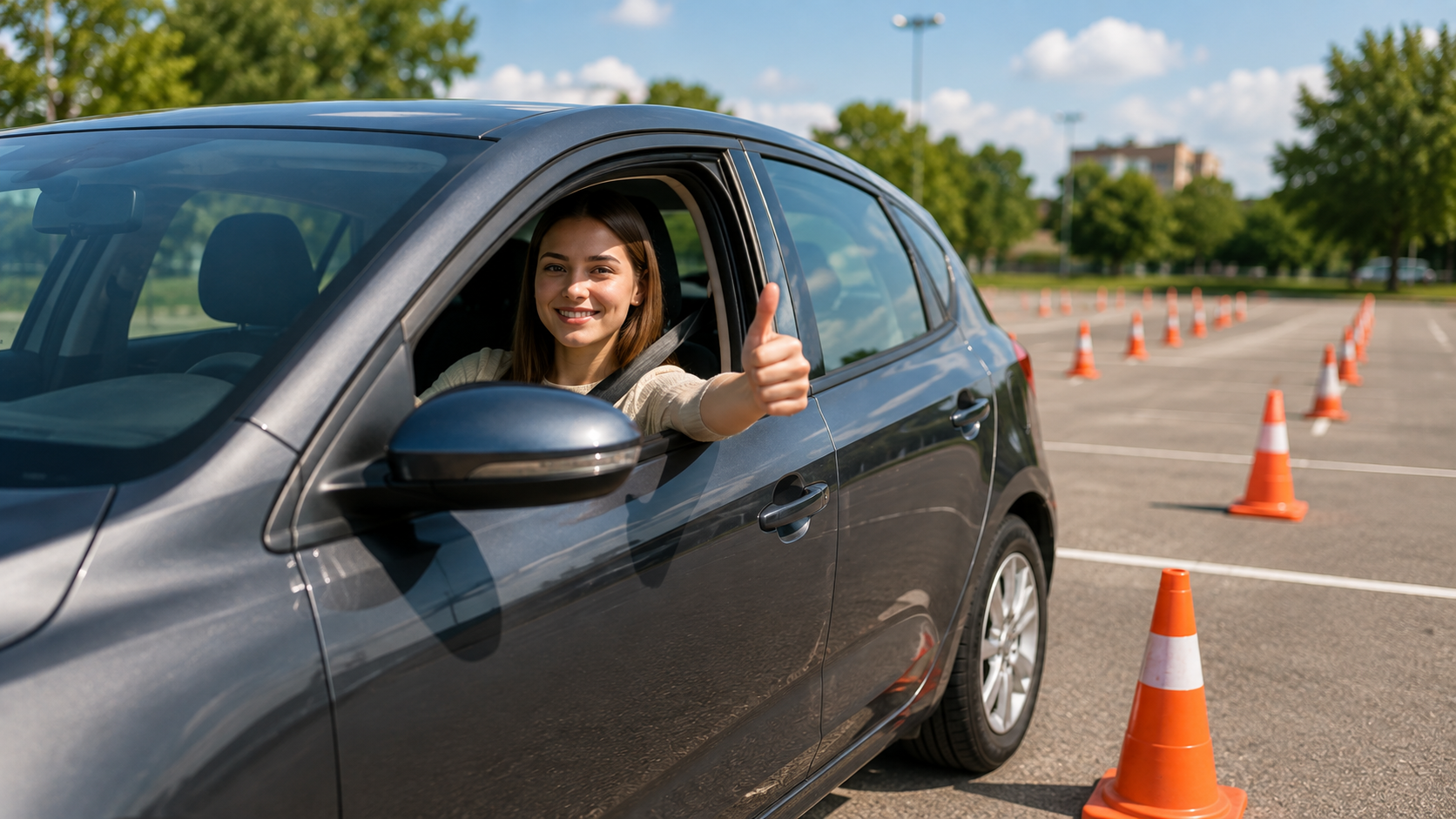
If this is your first experience behind the wheel, there is no need to worry about knowing anything beforehand.
Your first lessons can introduce you to the vehicle and its controls. You can learn how to adjust your seating position and mirrors, understand the pedals, operate the gears, and maintain suitable steering control.
Once you are comfortable with the basics, you can begin practising moving away and stopping.
Early mistakes are a normal part of learning. Stalling the car or making an imperfect gear change does not mean you are doing badly. Each mistake gives you an opportunity to understand what happened and improve your technique.
Clutch control is one of the first major skills a manual learner needs to develop.
The biting point may feel unfamiliar initially, and it can take several lessons before you feel completely comfortable using the clutch.
With guided practice, you can learn how to:
Find the biting point
Move away smoothly
Stop under control
Manage low-speed situations
Change gears
Reverse
Park
Start on hills
Better clutch control can make the entire driving experience feel smoother.
As your confidence grows, you should be able to use the clutch without giving it all of your attention.
Gear changes are another fundamental part of manual driving.
Your instructor can explain how different gears affect the vehicle and when a change may be appropriate.
You will gradually develop an understanding of how speed, road conditions, gradients, traffic, and upcoming hazards influence gear selection.
Smooth gear changes are not simply about comfort. Correct vehicle control can also help you maintain an appropriate speed and respond effectively to changing road situations.
Driving safely requires more than knowing how to operate a car.
You need to understand what is happening around you.
During your lessons, you can learn to look further ahead, check your mirrors regularly, identify potential hazards, and anticipate what other road users may do.
You may encounter parked cars, pedestrians, cyclists, buses, junctions, traffic lights, roundabouts, and changing traffic conditions while driving around Crompton and surrounding areas.
Each situation can help you develop better observation and decision-making skills.
One of the biggest differences between a learner and a confident driver is the ability to plan.
Instead of reacting when something happens directly in front of you, you should learn to identify situations early.
For example, if you see a line of parked cars ahead, you can begin assessing the road before you reach them. You can check your mirrors, consider approaching traffic, adjust your speed, and decide when it is safe to pass.
This type of anticipation is an important part of safe driving.
Junctions can be difficult when you are still developing your observation skills.
You need to approach at the correct speed, understand priorities, select the appropriate gear, position your vehicle correctly, and decide when it is safe to proceed.
Your instructor can help you practise different types of junctions and explain what you should be looking for.
Over time, you can become more comfortable making decisions without relying on constant prompts.
Roundabouts require you to process several pieces of information at once.
You may need to consider lane markings, traffic approaching from different directions, your intended exit, your speed, and your position.
Your lessons can help you break roundabout driving into manageable stages.
You can practise:
Approaching at an appropriate speed
Choosing the correct lane
Checking traffic
Judging safe gaps
Entering the roundabout
Maintaining correct positioning
Signalling
Exiting safely
Repeated practice can help turn a previously stressful situation into a familiar part of everyday driving.
Traffic-light-controlled junctions are another common feature of urban driving.
You will learn how to approach traffic lights safely, respond to changing signals, observe surrounding traffic, and plan your actions rather than reacting suddenly.
You can also develop an understanding of what is happening beyond the traffic light itself.
For example, if traffic is backed up on the other side of the junction, you need to consider whether there is enough space for you to proceed.
This is where observation and planning become just as important as vehicle control.
A driving licence should give you confidence to park as well as drive.
Your lessons can include practice with parking and reversing manoeuvres, helping you develop accurate steering and low-speed control.
You can work on different situations, including:
Bay parking
Parallel parking
Reversing
Controlled low-speed driving
Positioning
Observation
Judging distances
The aim is to help you understand how the car moves so that you can adapt to different spaces rather than relying solely on memorised instructions.
Hill starts are a common concern for people learning a manual vehicle.
You need to coordinate the clutch and accelerator while maintaining control of the vehicle.
Your instructor can demonstrate the process and give you repeated opportunities to practise until it becomes more comfortable.
Once you understand the technique, hill starts become another normal part of driving rather than something to worry about.
It is perfectly normal to feel nervous when learning to drive.
You may worry about stalling, getting too close to other vehicles, approaching a busy junction, or forgetting what you have been taught.
A supportive instructor can help you work through these concerns.
Lessons can progress at a suitable pace, giving you time to practise a skill before moving on to a more demanding situation.
As you experience successful drives, your confidence can naturally grow.
You may already have experience but still feel that certain areas are holding you back.
Perhaps you are comfortable with normal road driving but struggle at roundabouts. Maybe your vehicle control is good but your observation needs improvement.
Additional lessons can be targeted towards these specific issues.
Your instructor can assess your current ability and focus on the areas that will make the biggest difference to your progress.
This can be especially useful if you have taken a long break from driving lessons and want to rebuild your confidence.
The practical driving test is designed to assess whether you can drive safely and independently.
Good preparation therefore involves developing consistent habits rather than simply learning a particular test route.
As you approach test standard, your instructor can help you practise:
Independent driving
Following directions
Junctions
Roundabouts
Meeting and passing traffic
Road positioning
Speed control
Parking
Reversing
Moving off
Mirror checks
Signals
Hazard awareness
General vehicle control
The goal is to help you reach a level where you can make safe decisions without regular assistance.
There is no fixed lesson requirement for everyone.
Your progress depends on several factors, including your previous experience, confidence, learning style, lesson frequency, and ability to apply feedback.
Some people develop their skills quickly, while others need more time.
Regular practice can help reinforce what you have learned and prevent long gaps between sessions.
Instead of concentrating on a particular number of lessons, focus on whether you are becoming safer, more consistent, and more independent.
GP Driving School Stockport currently lists a 2-hour manual lesson at £76 and a 10-hour manual block at £360.
If you are planning to learn in Crompton, contact the school directly to confirm current prices, availability, booking arrangements, and lesson coverage before making your booking.
Discussing your experience with the instructor can also help determine what type of training is most appropriate for you.
No two learners are exactly alike.
One learner may need extra practice with clutch control, while another may require more work on observation or independent driving.
One-to-one tuition allows the lesson to reflect these differences.
Your instructor can spend additional time on difficult areas and introduce new challenges when you are ready.
This can make your training more focused and productive.
Passing your test is an important achievement, but it is not the end of your development as a driver.
Once you have your licence, you will eventually drive on unfamiliar roads, encounter unexpected situations, and make decisions without an instructor beside you.
Your lessons should therefore prepare you for independence.
You can gradually take more responsibility during your training, learning to plan journeys, identify hazards, select suitable speeds, and make decisions without constant prompts.
The habits you develop as a learner can influence your driving for years.
Your instructor can help you understand the importance of:
Regular mirror checks
Appropriate following distances
Safe speed
Effective observation
Hazard anticipation
Correct road positioning
Appropriate signalling
Smooth vehicle control
Consideration for other road users
These principles are useful whether you are driving locally in Crompton or travelling across the country.
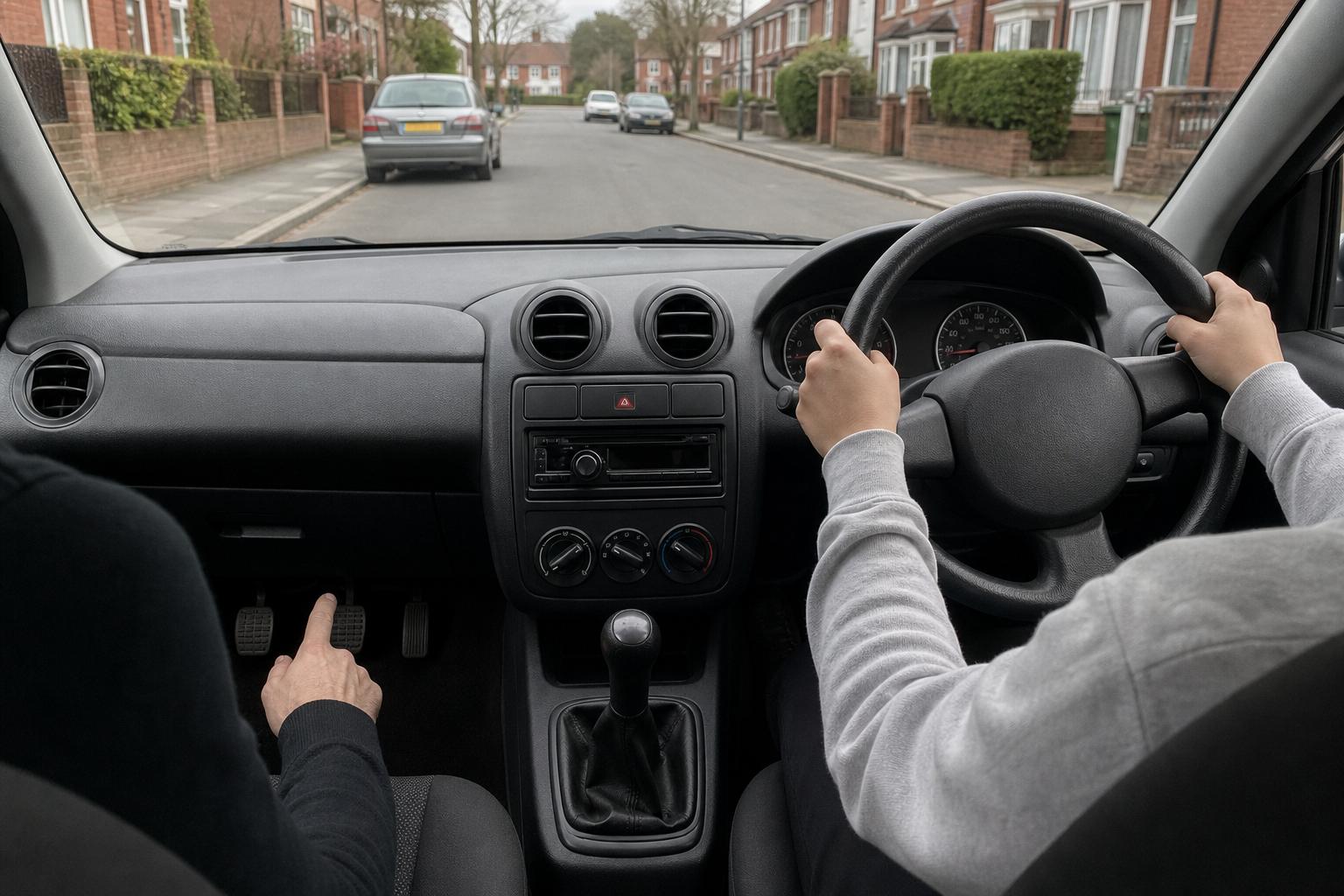
GP Driving School Stockport offers manual and automatic driving lessons with DVSA-approved instructors.
The school focuses on one-to-one tuition and a friendly learning environment, allowing lessons to be tailored to the learner’s ability and progress.
Whether you are starting from scratch or preparing for your practical test, the focus is on helping you develop the practical skills and confidence needed for safe driving.
If you are searching for manual driving lessons in Crompton, GP Driving School Stockport can help you take the next step towards becoming an independent driver.
You can start with the fundamentals and gradually progress to more demanding road situations. With regular practice and professional guidance, skills such as clutch control, gear changes, junctions, roundabouts, parking, and independent driving can become increasingly comfortable.
For current availability and booking information, contact:
GP Driving School Stockport
Stockport, United Kingdom
Phone: 07974 303207
Email: info@gp-drivingschoolstockport.co.uk
You do not have to wait until you feel confident before taking your first lesson. Confidence is something you develop through experience, instruction, and practice.
If you want to learn manual driving in Crompton, get in touch with GP Driving School Stockport to discuss your requirements.
Start learning today, build your confidence one lesson at a time, and work towards becoming a safe and independent manual driver.

