
Your Local Driving Instructor in Stockport Book Now!
Learning to drive a manual car is an important milestone that can bring greater freedom, independence, and flexibility to your everyday life. Whether you want to drive to work, attend college, manage family commitments, visit friends, or simply have more control over how you travel, gaining a full driving licence can open up many possibilities.
If you are searching for manual driving lessons in Ridge Hill, professional driving tuition can give you the structured practice and guidance needed to become a confident driver. From learning how to operate the clutch and gears for the first time to developing independent driving skills, each stage of your training can help prepare you for life behind the wheel.
GP Driving School Stockport provides manual and automatic driving lessons for learners with different levels of experience. Whether you are a complete beginner, have already had lessons, or are approaching your practical test, lessons can be adapted around your current ability and areas that require additional attention.
Good driving starts with good fundamentals.
When you first learn to drive a manual car, there are many things to think about. You need to control the clutch, accelerator, brakes, steering, gears, and mirrors while also watching the road and making decisions about other vehicles and road users.
It is normal for this to feel difficult initially.
With regular practice, however, individual actions can become more familiar. You can gradually move from thinking carefully about every control to handling the vehicle more naturally.
The purpose of professional tuition is to help you develop this foundation step by step rather than expecting you to master everything immediately.
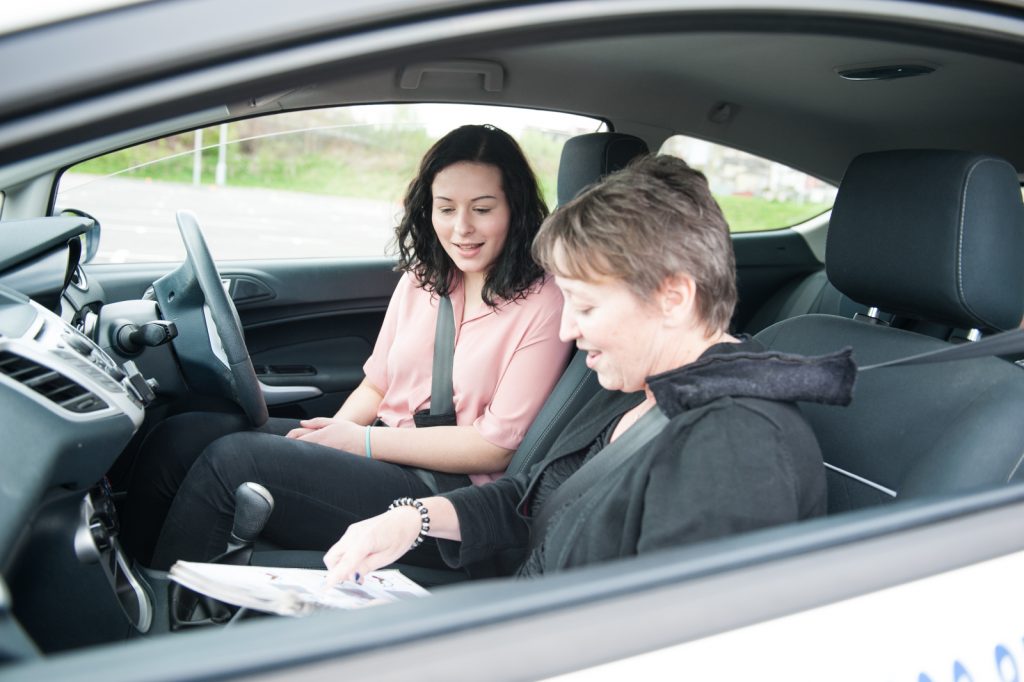
Manual driving teaches you how to coordinate the car’s clutch and gears while managing speed and direction.
For learners who want to understand vehicle control in greater detail, this can be a valuable experience.
Manual driving lessons can help you develop stronger clutch control, smoother gear changes, better low-speed manoeuvring, improved hill-start ability, and greater awareness of how the car responds to different situations.
Another advantage is flexibility. Learning in a manual car gives you experience with manual transmission, which can be useful when choosing or driving different vehicles in the future.
Most importantly, manual tuition can help you become comfortable making decisions while controlling the vehicle.
If you have never driven before, there is no reason to feel embarrassed about not knowing what to do.
Everyone has to start somewhere.
Your first lessons can introduce you to the basic controls of the vehicle. You can learn how to position yourself comfortably, adjust your mirrors, understand the pedals, operate the clutch, select gears, steer, and safely move the car.
Initially, your instructor may provide detailed guidance.
As you become more familiar with the controls, you can begin taking greater responsibility for your driving.
You may stall occasionally or make an awkward gear change. These things can happen during the learning process. The important part is understanding why the mistake occurred and learning how to avoid repeating it.
Clutch control is one of the most important skills for anyone learning to drive a manual car.
Finding the biting point can take practice because the response of the clutch is something you need to learn through experience.
Your instructor can help you understand how to coordinate the clutch and accelerator when moving away.
As your skills improve, you can use clutch control confidently during low-speed situations, reversing, parking, queues, and hill starts.
Good clutch control can make your driving smoother and can reduce the amount of concentration required to operate the vehicle.
Changing gears should eventually become a natural part of driving.
During your lessons, you can learn how to recognise when a gear change is appropriate by considering your speed, road conditions, gradients, traffic, and what is happening ahead.
You can also learn how to change gears without losing control of your road position or neglecting your observation.
The goal is not simply to know where the gears are. You should understand why and when different gears may be appropriate.
Learning to drive in and around Ridge Hill can help you experience a mixture of everyday road conditions.
As your confidence develops, you can practise dealing with residential roads, junctions, traffic, parked vehicles, pedestrians, cyclists, roundabouts, and different road layouts.
Local driving experience can be useful because it allows you to become familiar with real-world situations.
However, learning should not depend on memorising particular routes. Once you pass your test, you will need to drive in unfamiliar areas.
Developing transferable skills is therefore much more valuable than simply knowing where every road leads.
Observation is one of the most important parts of driving.
A learner needs to look well ahead, check mirrors, recognise road signs, watch other road users, and identify potential hazards.
Your instructor can help you develop a systematic approach to observation.
For example, you might notice a parked vehicle ahead. Instead of waiting until you are beside it, you can consider whether an approaching vehicle may prevent you from passing safely.
This gives you more time to adjust your speed and position.
Hazard awareness means recognising situations that could require you to change your speed or direction.
A pedestrian standing close to the road, a cyclist approaching an obstruction, a vehicle waiting at a junction, or a parked car blocking your view can all require additional attention.
You can learn to identify these situations early and plan accordingly.
The more effectively you anticipate hazards, the less likely you are to be forced into sudden decisions.
Good drivers think beyond what is immediately in front of them.
If you see a queue of traffic further ahead, you may need to reduce your speed earlier. If you notice a junction approaching, you may need to consider your position and gear.
Planning gives you more time.
Instead of making last-second decisions, you can prepare for what is likely to happen next.
This can make your driving smoother and more comfortable for both you and your passengers.
Junctions are a fundamental part of everyday driving.
They require observation, planning, positioning, speed control, gear selection, and decision-making.
Your instructor can introduce different types of junctions as your ability develops.
You can practise approaching junctions, understanding priorities, turning left and right, emerging safely, and responding to approaching traffic.
Eventually, you should be able to make these decisions independently without needing constant prompts.
Roundabouts can initially be challenging because you need to process several pieces of information at once.
You need to think about your intended exit, lane markings, approaching traffic, speed, mirrors, signals, and road position.
Your instructor can break the process down into manageable stages.
You can learn how to approach safely, choose the correct lane, observe traffic, judge gaps, enter appropriately, maintain your position, and leave using the correct exit.
With repeated practice, roundabouts can become a much more familiar part of your driving.
Parking is a skill that becomes especially important once you begin driving independently.
You may need to park outside your home, at work, near shops, at a supermarket, or in an unfamiliar car park.
Your lessons can provide practice with different parking situations and low-speed manoeuvres.
You can work on parallel parking, bay parking, reversing, steering accuracy, clutch control, observation, and positioning.
The objective is to understand the vehicle rather than simply memorise a sequence of movements.
That understanding can help you adapt when a parking space is smaller, larger, or positioned differently from the ones you have practised in.
Hill starts are another area where manual learners often want additional practice.
Starting on a gradient requires careful coordination of the clutch and accelerator while maintaining control of the vehicle.
Your instructor can demonstrate an appropriate technique and give you opportunities to practise it.
As your clutch control improves, hill starts can become a normal part of your driving rather than a situation you worry about.
As a beginner, you may feel most comfortable on quiet roads.
However, eventually you need to become capable of handling busier conditions.
Your lessons can gradually introduce more traffic as your skills develop.
You can learn how to maintain safe following distances, manage queues, respond to changing traffic, observe vehicles around you, and avoid rushing because another road user is impatient.
Busy traffic requires patience as well as vehicle control.
Drivers need to consider vulnerable road users carefully.
Pedestrians may cross unexpectedly, while cyclists may need to move around parked vehicles, potholes, or other obstructions.
Your instructor can help you develop the habit of giving these road users appropriate space and anticipating their movements.
Good observation can make it easier to identify potential problems before they develop.
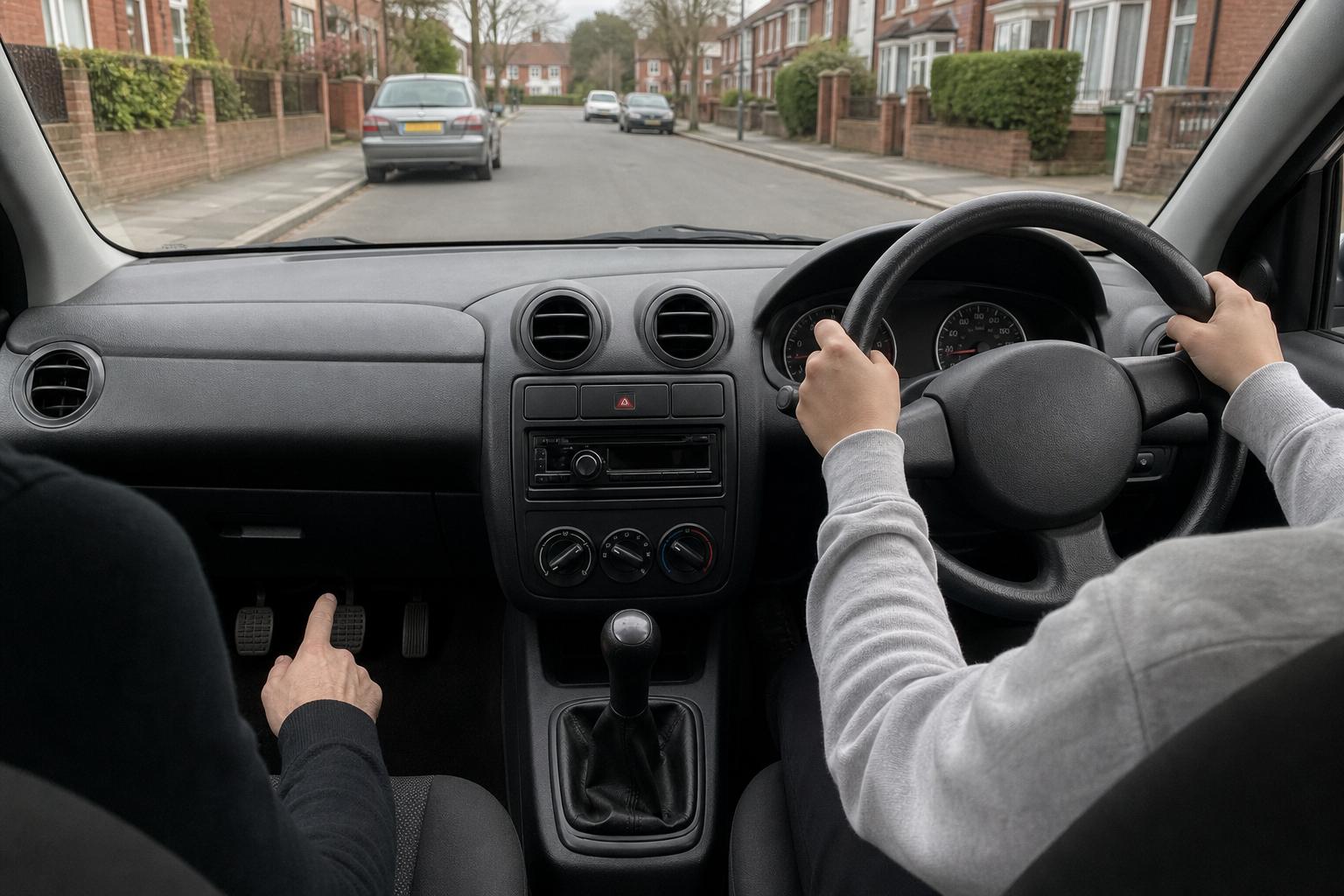
Feeling nervous about learning to drive is common.
You may worry about stalling, getting confused at junctions, making mistakes in traffic, or holding up other drivers.
These concerns can become easier to manage as you gain experience.
A patient instructor can introduce new situations progressively, allowing you to build confidence instead of placing you into situations that feel overwhelming.
You do not have to be confident before you start driving lessons. Confidence can develop naturally as you learn and successfully handle new situations.
Not everyone looking for driving lessons is a complete beginner.
You may already have taken several lessons but feel that your progress has slowed.
Perhaps you are comfortable with basic driving but struggle with roundabouts. Maybe you need more practice with parking, clutch control, busy traffic, or independent driving.
Additional tuition can focus specifically on these areas.
This can make your lessons more useful because you spend time addressing the skills that are preventing you from progressing.
When your driving skills are approaching test standard, your lessons can become more focused on consistency and independence.
You can practise the different skills expected during practical driving, including independent driving, junctions, roundabouts, parking, reversing, road positioning, speed control, mirror use, signalling, and hazard awareness.
Your instructor can also identify recurring mistakes.
For example, you might repeatedly approach certain junctions too quickly or forget to check mirrors before changing direction.
Identifying patterns like these gives you an opportunity to correct them before your test.
One of the biggest stages in driving tuition is learning to make your own decisions.
At the beginning, your instructor may tell you where to go and when to perform particular actions.
As your skills improve, those instructions should gradually reduce.
You can start deciding:
This gradual increase in responsibility helps prepare you for driving alone.
Making mistakes does not mean you are failing.
Driving involves many different skills, and mistakes are a natural part of learning.
You might stall the vehicle, select an inappropriate gear, position incorrectly, or misjudge a situation.
Instead of simply trying to forget the mistake, it is useful to understand why it happened.
Your instructor can explain what you should have observed, what decision could have been made earlier, and how to handle a similar situation in the future.
This can help develop genuine driving judgement.
The habits you develop while learning can influence your driving for years.
Good habits include checking mirrors regularly, looking ahead, maintaining safe following distances, controlling speed, anticipating hazards, using signals appropriately, and remaining patient.
You should also develop awareness of pedestrians, cyclists, motorcyclists, and other vehicles.
A good driver considers the wider road environment rather than focusing only on their own car.
Consistency can play an important role in driving tuition.
Regular lessons allow you to build upon previous knowledge while keeping important skills fresh.
After each lesson, it can be helpful to think about what you learned and which areas you would like to improve.
You can discuss these areas with your instructor so that future lessons can be planned around your progress.
Everyone learns at a different pace, so there is no single number of lessons that guarantees that someone will be ready for their test.
A driving licence can give you independence, but learning to drive can also develop valuable personal skills.
You can improve your concentration, observation, patience, planning, decision-making, and awareness.
Driving also teaches you to take responsibility for your actions and consider how your decisions affect other people.
These qualities can help you become a more thoughtful and responsible road user.
Your reason for learning to drive may be completely different from another learner’s.
You may need a licence to improve your employment opportunities. You may want to make commuting easier or reduce your dependence on public transport. Perhaps you simply want to achieve the personal goal of passing your driving test.
Whatever your reason, lessons can be tailored around your ability and objectives.
The most important thing is to develop the skills you need to drive safely and confidently after passing.
GP Driving School Stockport currently lists a 2-hour manual driving lesson for £76 and a 10-hour manual block for £360.
Prices and availability can change, so if you are interested in manual driving lessons in Ridge Hill, contact the driving school directly to confirm the latest pricing, lesson availability, pickup arrangements, and area coverage before booking.
GP Driving School Stockport offers manual and automatic driving tuition with DVSA-approved instructors.
The school focuses on one-to-one training and a friendly learning environment. This allows lessons to be adapted around the learner’s experience, confidence, and progress.
Whether you are learning from the beginning or preparing for your practical test, professional tuition can help you identify areas for improvement and develop the skills needed for independent driving.
If you are searching for manual driving lessons in Ridge Hill, GP Driving School Stockport can help you work towards becoming a confident and responsible driver.
Your training can begin with the fundamentals of manual vehicle control before progressing to more demanding situations. You can develop clutch control, gear changes, junction skills, roundabout confidence, parking ability, hill-start techniques, hazard awareness, and independent driving.
The aim is not simply to help you complete a driving test. It is to help you become capable of handling everyday roads safely once you have your licence.
Everyone has a different learning style.
Some learners need more time with the clutch, while others may require additional practice with road positioning or independent decision-making.
A flexible approach allows you to focus on the areas where you need the most support.
With regular practice and professional feedback, you can gradually become more comfortable and take greater responsibility for your driving.
GP Driving School Stockport
Stockport, United Kingdom
Phone: 07974 303207
Email: info@gp-drivingschoolstockport.co.uk
You do not need previous experience to begin learning.
Your first lesson can be the starting point of a gradual journey from understanding the basic controls to confidently handling everyday roads and traffic.
If you are ready to start manual driving lessons in Ridge Hill, contact GP Driving School Stockport to discuss your requirements.
Learn the controls, practise the skills, understand the road, build your confidence, and work towards becoming a safe and independent driver.

