
Your Local Driving Instructor in Stockport Book Now!
Learning to drive a manual car is a skill that can give you freedom, independence, and greater confidence when travelling. Whether you need a licence for work, want to make everyday journeys easier, or simply want the ability to drive yourself wherever you need to go, professional driving lessons can help you reach that goal.
If you are searching for manual driving lessons in Waterhead, GP Driving School Stockport provides structured tuition for learners at different stages. You may be a complete beginner taking your first lesson, an experienced learner who needs extra practice, or someone preparing for the practical driving test.
The approach is centred around helping you understand the car, the road, and the decisions you need to make as a driver.
A manual car gives you direct involvement in controlling the vehicle. You learn to coordinate the clutch, gears, accelerator, brakes, steering, and other controls while observing everything happening around you.
This can seem challenging during the first few lessons, but regular practice makes the process progressively easier.
Learning manual driving can help you develop:
Better vehicle control
Clutch coordination
Gear-changing skills
Low-speed control
Hill-start confidence
Stronger observation
Better road awareness
Independent decision-making
Greater confidence in different traffic situations
The purpose of your lessons should be to help you become a capable driver, not simply someone who can complete a test route.
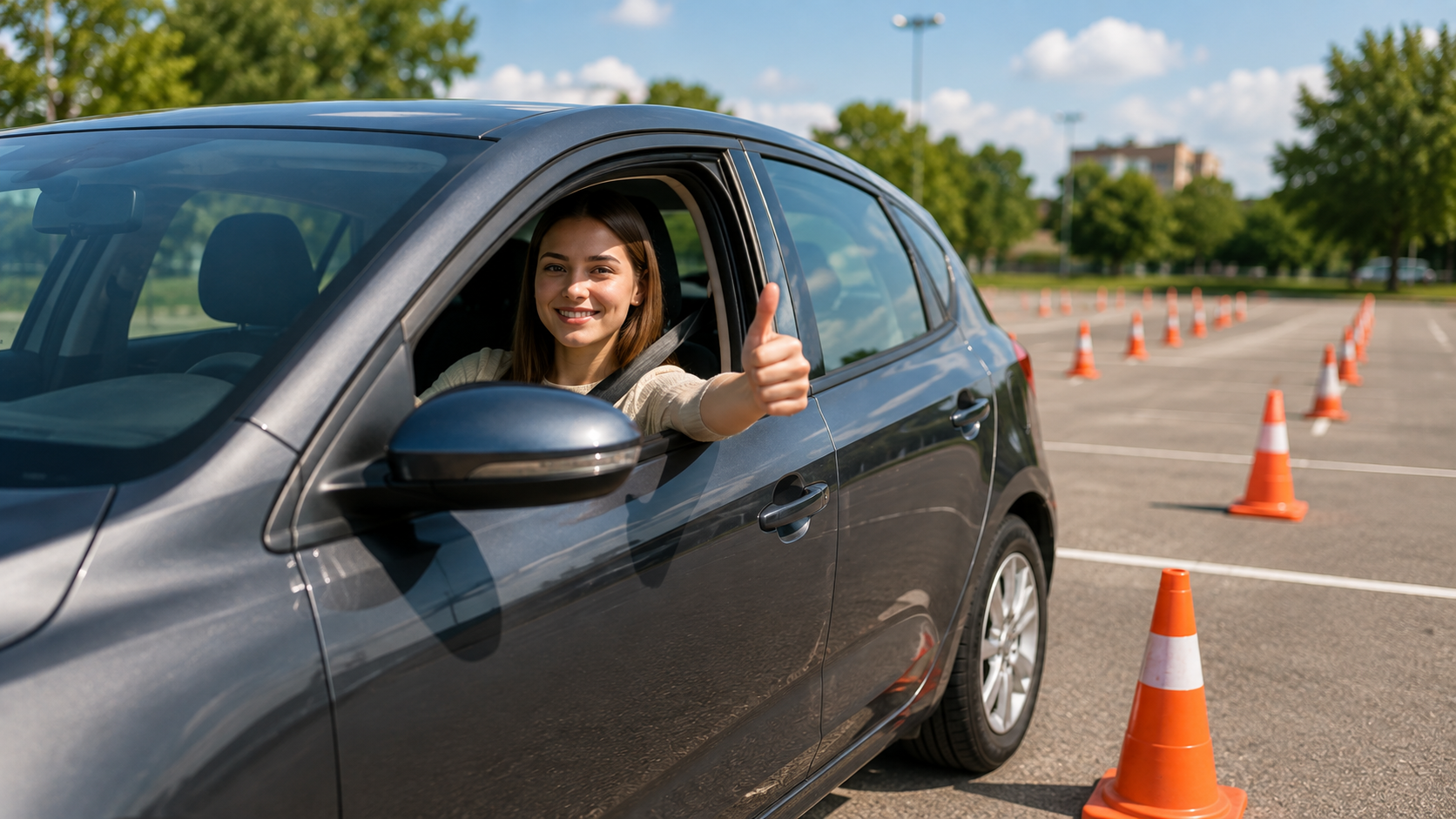
Not every learner begins from the same point.
If you have never driven before, you may need more time to understand basic controls. If you have already completed several lessons, you may be ready for more complex traffic situations.
Your lessons can be adjusted according to your ability.
A beginner may spend more time on clutch control and moving off, while a more experienced learner may focus on independent driving, roundabouts, parking, or test preparation.
This personalised approach can make lessons more relevant and productive.
Your first lesson can be an introduction to the vehicle and the basic principles of driving.
You can learn how to establish a comfortable driving position, adjust your mirrors, understand the pedals, use the steering wheel, and operate the gear lever.
You may then begin practising simple vehicle-control exercises.
It is perfectly normal to make mistakes during your first lessons. You may stall the engine, change gear awkwardly, or find it difficult to coordinate the clutch and accelerator.
These are all opportunities to learn.
With guidance and repetition, you can gradually become more comfortable.
Clutch control is one of the first major challenges when learning a manual vehicle.
Finding the biting point requires coordination and practice. Once you understand how the clutch responds, you can begin moving the car more smoothly.
Your instructor can help you practise clutch control during:
Moving off
Stopping
Reversing
Parking
Slow-moving traffic
Hill starts
Low-speed manoeuvres
The more familiar you become with the clutch, the less attention you need to give to it.
Gear changes are another important part of manual driving.
Your instructor can explain how to recognise when a different gear is appropriate and how to change gear smoothly.
You will learn to consider your speed, the road ahead, traffic, gradients, and what you need to do next.
Over time, gear selection can become a natural part of your driving rather than something you have to consciously think about at every moment.
Driving is a continuous process of observation and decision-making.
A learner needs to be aware of what is happening directly ahead as well as what may happen several seconds from now.
During lessons, you can learn to:
Look well ahead
Check mirrors regularly
Identify hazards
Anticipate other road users
Adjust speed
Plan your position
Recognise changes in traffic
Respond calmly to unexpected situations
These skills can help you become more prepared for independent driving.
Learning around Waterhead can give you practical experience of different road environments and traffic situations.
As your confidence develops, you can work on dealing with junctions, parked vehicles, pedestrians, cyclists, traffic lights, roundabouts, and different road gradients.
The important point is not simply knowing where you are. A good driver needs to understand how to deal with unfamiliar roads as well.
Your instructor can help you develop techniques that can be applied wherever you drive.
Junctions require careful observation, planning, and vehicle control.
You need to approach at an appropriate speed, understand priorities, select the correct gear, position the vehicle properly, and decide when it is safe to proceed.
Your instructor can introduce different junction situations progressively.
You can practise turning left and right, emerging from side roads, dealing with approaching traffic, and making safe decisions without rushing.
As your confidence improves, you can take more responsibility for deciding how to approach each junction.
Roundabouts can initially be one of the more stressful parts of learning to drive.
There can be several vehicles moving around you, multiple lanes to consider, and decisions that need to be made quickly.
Your instructor can help you break the process into manageable stages.
You can practise:
Approaching safely
Choosing the correct lane
Checking mirrors
Observing approaching traffic
Judging safe gaps
Entering the roundabout
Maintaining suitable positioning
Signalling
Taking the correct exit
With enough practice, roundabouts can become a familiar part of everyday driving.
A driver needs to be comfortable controlling a vehicle at low speeds.
Parking and reversing practice can help you improve steering accuracy, clutch control, observation, and positioning.
Lessons can cover different situations, including bay parking, parallel parking, reversing, and other low-speed manoeuvres.
Rather than memorising a single set of movements, the objective is to understand how the car responds so you can adapt to different spaces.
Manual learners often want extra practice with hills.
Starting on an incline requires careful coordination of the clutch and accelerator while keeping the vehicle under control.
Your instructor can teach you a suitable technique and give you time to practise.
Developing this skill can make you more comfortable driving on roads with different gradients and can improve your overall control of the car.
Driving in quiet conditions can feel very different from driving during busy periods.
As your ability improves, your lessons can introduce more demanding traffic situations.
You can learn how to maintain a safe distance, manage your speed, anticipate other drivers, and avoid rushed decisions.
The objective is to help you remain calm and controlled even when several things are happening around you.
Good drivers try to anticipate potential hazards before they become immediate problems.
A parked vehicle may hide a pedestrian. A vehicle waiting at a junction may pull out. A cyclist may change position to avoid an obstruction.
During your lessons, you can learn to recognise clues like these and plan accordingly.
Look beyond the vehicle immediately in front of you and continually scan the road environment.
Think about what other road users might do next.
Give yourself enough time and space to respond safely.
Developing these three habits can significantly improve your driving.
At the beginning of your training, your instructor may provide frequent instructions.
As you become more capable, those instructions should gradually reduce.
You can begin making your own decisions about:
Road position
Speed
Gear selection
Junction approach
Hazard response
Lane choice
Route planning
This gradual transition helps prepare you for the point when you will be driving without an instructor.
Some people feel anxious when they first begin driving.
You may worry about stalling, approaching traffic, complicated junctions, or making mistakes in front of other drivers.
A supportive learning environment can help reduce these concerns.
Your instructor can explain each situation, give you time to practise, and gradually introduce more challenging roads when you are ready.
Confidence comes from experience. Each successful lesson can make the next one feel easier.
You may already have completed many driving lessons but still feel that certain areas need work.
Additional manual tuition can focus on your particular weaknesses.
For example, you may need extra practice with:
Roundabouts
Junctions
Gear changes
Clutch control
Parking
Reversing
Independent driving
Road positioning
Hazard awareness
Busy traffic
Focused training can help you improve without spending unnecessary time on skills you already understand.
When you are approaching test standard, your lessons can become more focused on consistency and independence.
You may practise independent driving, junctions, roundabouts, parking, reversing, appropriate speed, road positioning, mirror use, signals, and general vehicle control.
Your instructor can also help you identify recurring mistakes.
The objective is to help you reach a point where you can demonstrate safe driving without frequent prompts.
Your progress is influenced by more than the time spent behind the wheel.
Regular lessons can help you maintain continuity and remember what you learned previously.
You can also improve by thinking about your lessons afterwards. Consider what went well, what you found difficult, and what you want to improve during your next session.
If you have access to safe private practice with an appropriately qualified and insured supervising driver, additional experience can also help reinforce your tuition.
Nobody becomes a perfect driver immediately.
You may make an incorrect gear selection, approach a junction too quickly, or misjudge your positioning.
What matters is learning from the experience.
Your instructor can explain what happened, why it happened, and what you can do differently next time.
This approach helps you develop judgement rather than simply memorising instructions.
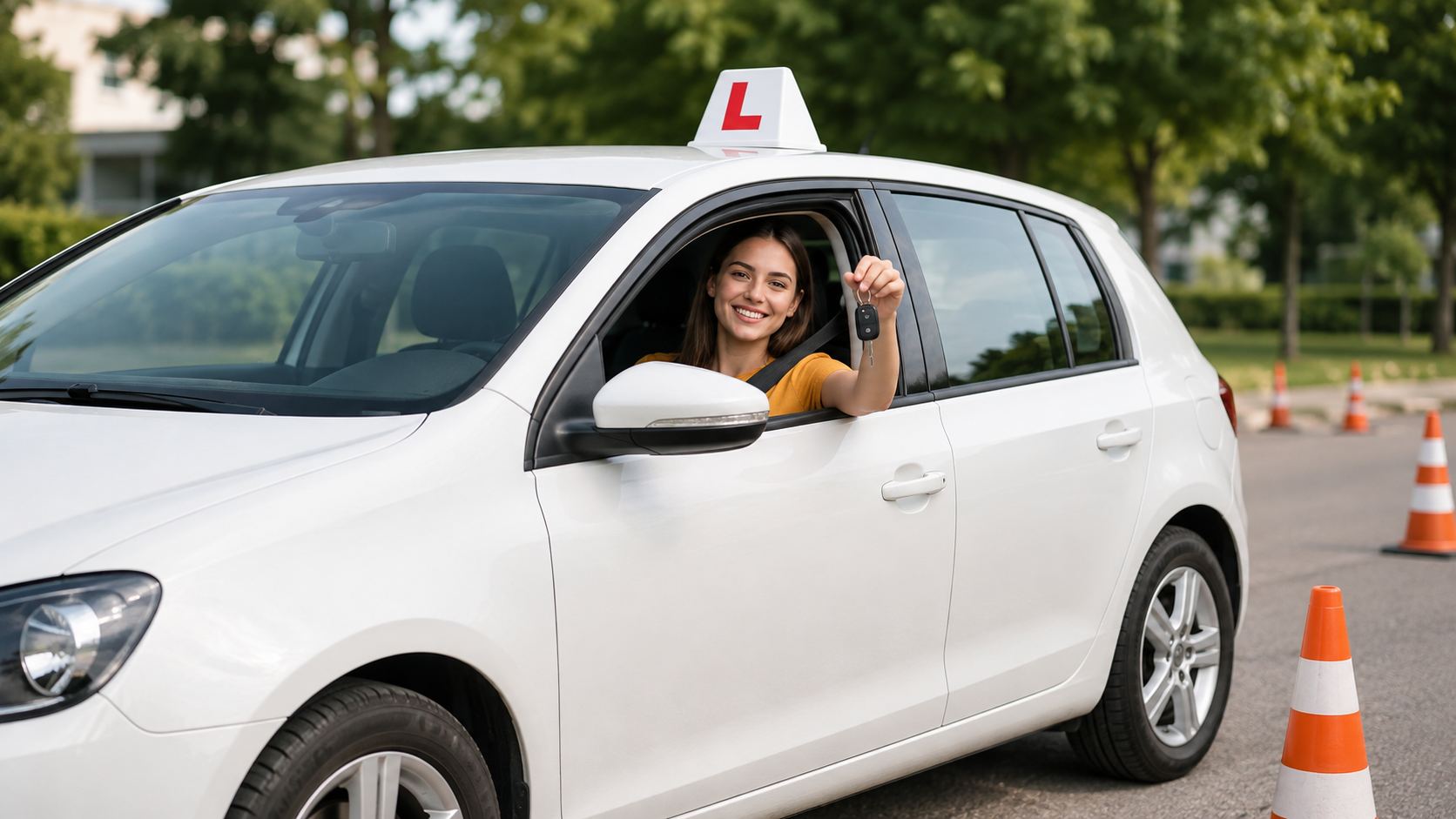
A driving licence is only one of the benefits of learning to drive.
During your training, you can also develop skills that are useful in many areas of life.
These include:
Concentration
Observation
Patience
Planning
Decision-making
Responsibility
Confidence
Awareness of other people
Becoming a good driver means learning to consider how your decisions affect other road users.
GP Driving School Stockport currently lists a 2-hour manual lesson for £76 and a 10-hour manual block for £360.
If you are interested in manual driving lessons in Waterhead, contact the school directly to confirm current pricing, availability, lesson arrangements, and coverage before booking.
GP Driving School Stockport offers manual and automatic driving lessons with DVSA-approved instructors.
The school provides one-to-one tuition and aims to create a friendly learning environment where lessons can be adapted to individual progress.
Whether you are learning from scratch or preparing for your practical test, professional guidance can help you understand your strengths, work on weaker areas, and gradually become more independent.
If you are looking for manual driving lessons in Waterhead, GP Driving School Stockport can help you develop the practical skills required for confident and responsible driving.
From basic clutch control to independent driving, each stage of your training has a purpose. You can learn how to control the vehicle, understand road situations, anticipate hazards, and make safer decisions.
GP Driving School Stockport
Stockport, United Kingdom
Phone: 07974 303207
Email: info@gp-drivingschoolstockport.co.uk
You do not need to know how to drive before your first lesson. That is what professional instruction is for.
If you are ready to learn manual driving in Waterhead, contact GP Driving School Stockport and discuss your requirements.
Start with the basics, build your skills through practice, and work towards becoming a confident, safe, and independent driver.

